Neutrophil Elastase Degraded Fragment of Type III Collagen Is Elevated in IBD Patients

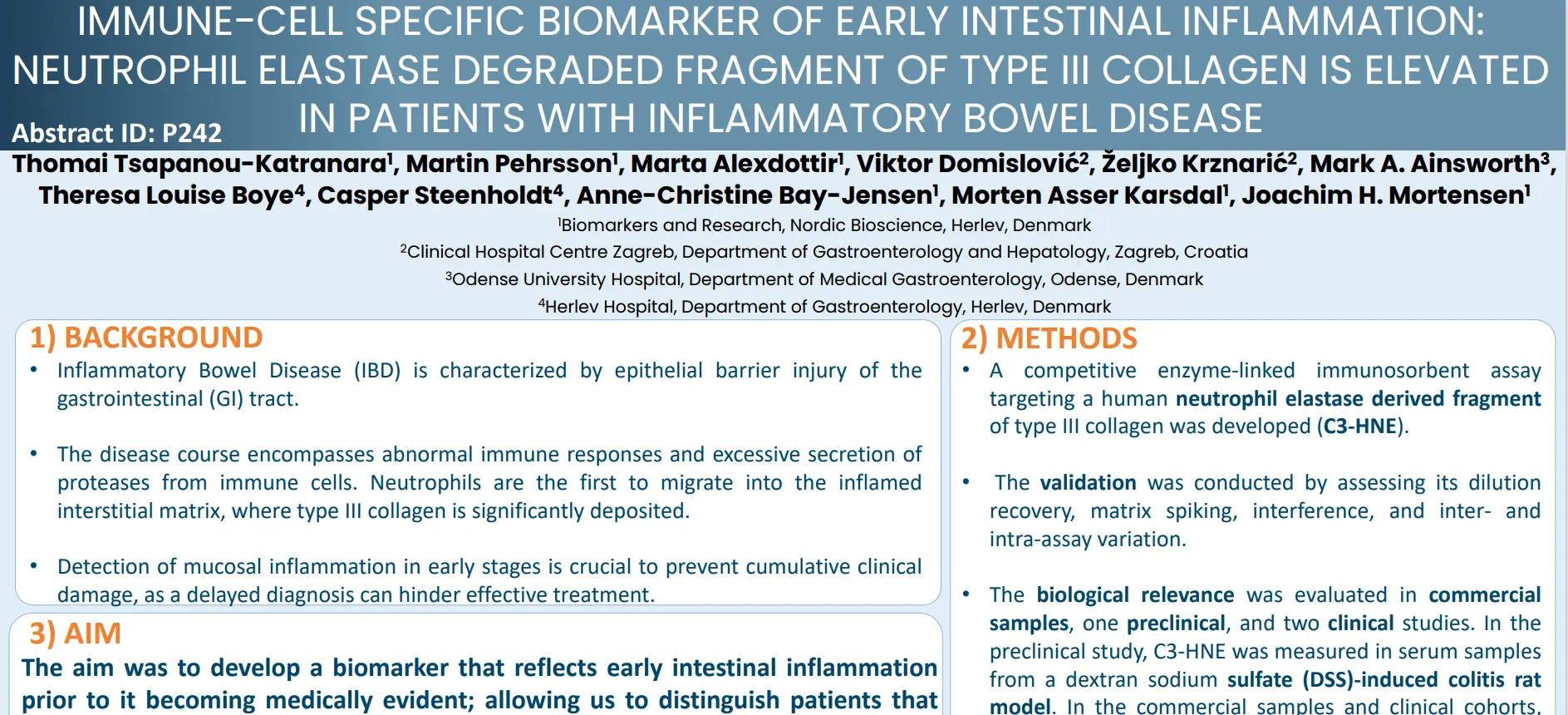
Immune-cell specific biomarker of early intestinal inflammation: Neutrophil elastase degraded fragment of type III collagen is elevated in patients with inflammatory bowel disease

Introduction

Inflammatory Bowel Disease (IBD) is characterized by epithelial barrier injury of the gastrointestinal (GI) tract and is driven by abnormal immune responses and excessive secretion of proteases from immune cells. Among these, neutrophils are the first to migrate into the inflamed interstitial matrix, where type III collagen is significantly deposited. Early detection of mucosal inflammation is crucial to prevent cumulative clinical damage, as a delayed diagnosis can hinder effective treatment.

In this study we aimed to develop a biomarker that reflects early intestinal inflammation prior to it becoming medically evident; allowing us to distinguish patients that would benefit from an anti-inflammatory treatment.

Poster

Conclusion

C3-HNE levels are elevated in patients with IBD compared with HD. This increase is also observed in conditioned media from primary neutrophils activated with lipopolysaccharide (LPS) for six hours. Importantly, C3-HNE reflects the early stages of clinically apparent mucosal damage in experimental models of colitis. As such, this biomarker holds promise for identifying early mucosal injury or acute inflammation in the gastrointestinal tract. Nevertheless, additional studies are needed to evaluate its clinical validity.

Get in touch

Are you interested in exploring collaboration possibilities?
Enter your information in the form and a representative will contact you shortly.

    Type III Collagen Biomarkers as Markers of Endoscopic Disease Activity in Ulcerative Colitis

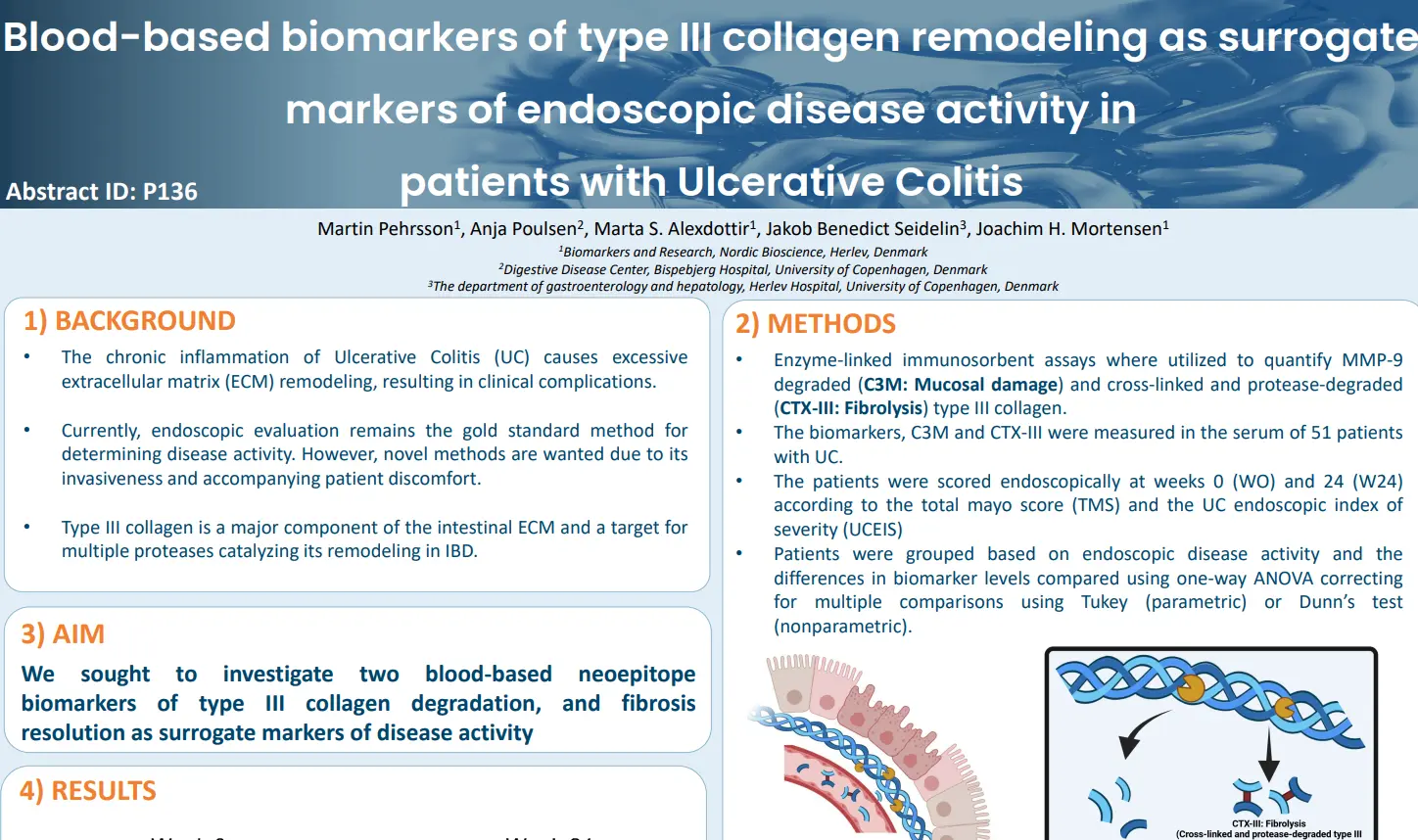
    Blood-based biomarkers of type III collagen remodeling as surrogate markers of endoscopic disease activity in patients with ulcerative colitis

    Introduction

    The chronic inflammation of Ulcerative Colitis (UC) causes excessive extracellular matrix (ECM) remodeling, resulting in clinical complications. Currently, endoscopic evaluation remains the gold standard method for determining disease activity. However, novel methods are wanted due to its
    invasiveness and accompanying patient discomfort.

    As type III collagen is a major component of the intestinal ECM and a target for multiple proteases catalyzing its remodeling in IBD, we sought to investigate two blood-based neoepitope biomarkers of type III collagen degradation, and fibrosis resolution as surrogate markers of disease activity.

    Poster

    Conclusion

    C3M was elevated at Week 0 in UC patients with severe endoscopic disease activity according to the Total Mayo Score. The fibrolysis biomarker, nordicCTX-III™, was significantly elevated in patients with moderate endoscopic disease at week 0 and numerically elevated in mild disease compared to severe disease activity.

    Get in touch

    Are you interested in exploring collaboration possibilities?
Enter your information in the form and a representative will contact you shortly.