We are changing people’s lives and making an impact!
“I hope this year will be as productive as last year! Congratulations to Team Nordic,” said Morten Karsdal, CEO of Nordic Bioscience, as we close out 2021 and head into 2022. “Thank you for your commitment and support to our mission: to change people’s lives through precision medicine and serological quantification of the extracellular matrix (ECM), enabled by high-precision instrumentation,” Morten Karsdal emphasized.
Nordic Bioscience has published a total of 59 publications in 2021, exclusively in peer-reviewed journals, with an average impact factor of 6.62, which shows the impact Nordic Bioscience scientists are leaving in the field. This means that quantity and quality go hand in hand, as an impact factor above 5 is a very good distinction. Even more, many of these 59 publications have an impact factor above 10 or even 20.
Nordic Bioscience’s research group is highly regarded in its field and a leader in extracellular matrix (ECM) science and quantification, proving that the company’s efforts are having an impact.
“When we visited customers in December during our normal pharma tour,” says Morten Karsdal, “I often heard how impressed our customers were with the interaction of our senior scientists and directors and the seamless coordination of the lab. “It is clear that we are all making a difference by trying to do things a little bit better every day,” the CEO added.
These successes are the culmination of a year-long team effort. The publications are based on data, and all data start with an idea for a biomarker. Assay development, assay production, assay validation, assay measurements, biobank samples, legal contracts, quality control, data reporting, and so on: all these pieces of the puzzle are required to produce publications that demonstrate value to patients and science.
Finally, the 3rd edition of Nordic Bioscience’s collagen book will be published in 2022, after the 2nd edition was downloaded 9000 times.
Get in touch
Are you interested in exploring collaboration possibilities? Enter your information in the form and a representative will contact you shortly.
Nordic Bioscience digest of the Best of 2022 publication series
In 2022, our scientific teams have once again worked incredibly hard to advance our technologies to better benefit patients in need. With more than 60 publications, we have published an average of more than 5 articles per month this year.
We have put together the best of 2022 for you from our various focal points—in no particular order. We invite you to browse and read according to your interests!
Respiratory
Novel treatments for idiopathic pulmonary fibrosis (IPF) are needed to combat this devastating disease.
To investigate the antifibrotic effect of novel compounds and increase the chances of success in clinical trials, blood-based biomarkers may already be introduced at early stages of development.
Conventional serum calprotectin biomarkers are often not as clinically useful as the fecal versions because the short half-life of calprotectin in blood reduces the window in which the current serum calprotectin ELISA assay can detect calprotectin dimer protein.
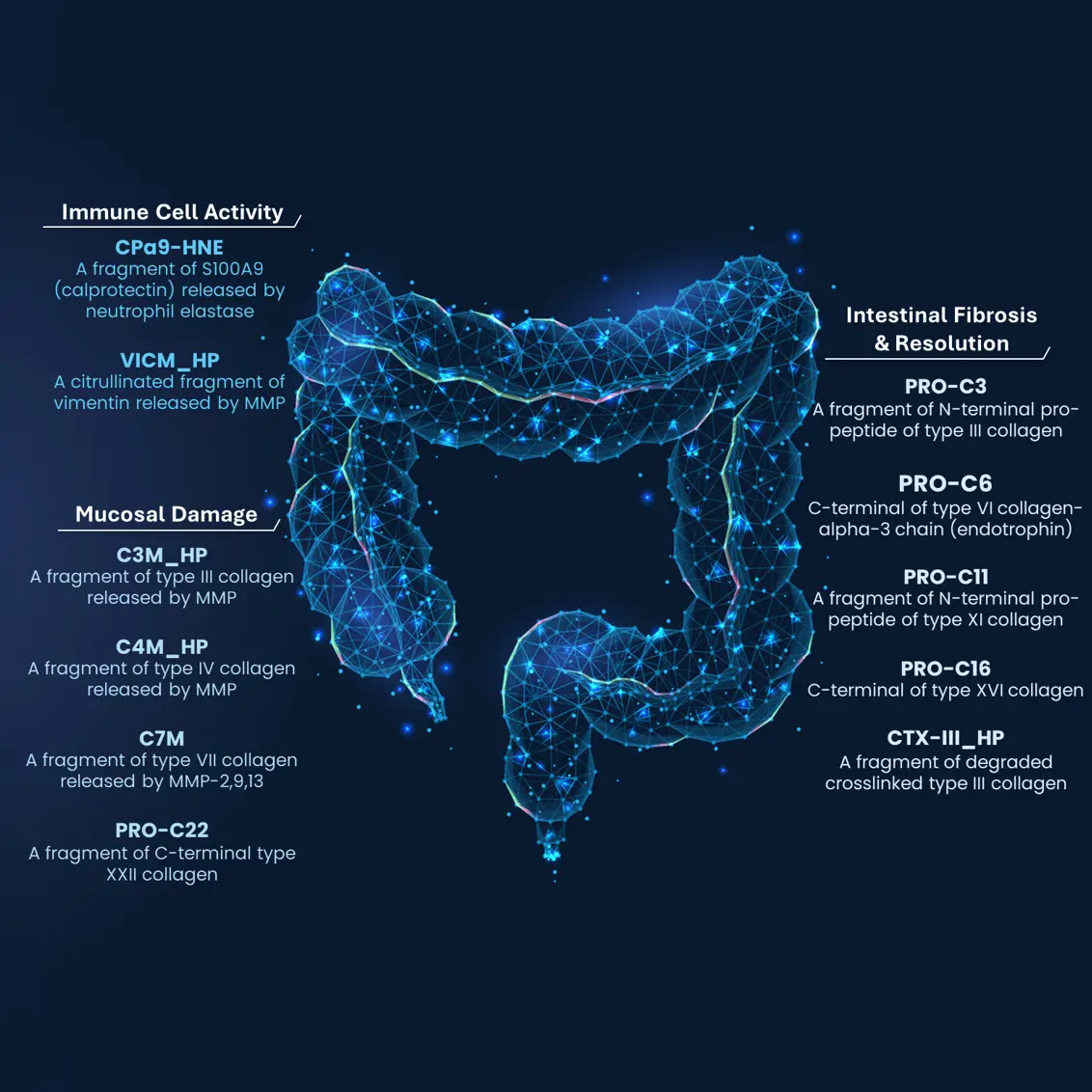
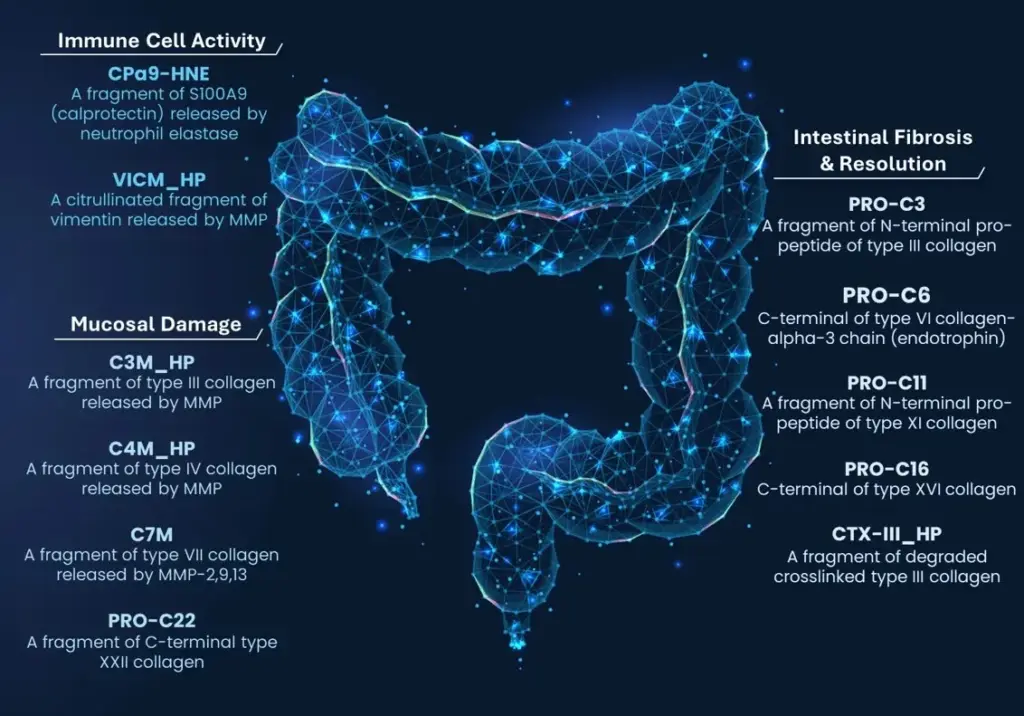
CPa9-HNE ELISA has emerged as a novel serum calprotectin biomarker with significant clinical potential as a biomarker for patients with IBD to monitor disease activity and neutrophil activity.
Monitoring changes in the extracellular matrix during liver fibrosis is of great interest. Biomarkers to assess fibrogenesis already exist, but biomarkers of fibrosis resolution have not been validated.
These biomarkers would be equally valuable for understanding disease progression or the mechanism of a particular intervention, and for understanding the potential induction of hepatic fibrosis resolution.
Identification of biomarkers associated with psoriatic arthritis (PsA) disease and their potential as predictors of response to treatment are unmet needs in PsA.
The aim of the study was to investigate the association of serum levels of tissue turnover biomarkers with PsA disease phenotypes and response to Guselkumab treatment.
All agree that osteoarthritis (OA) is a heterogeneous disease – drugs in development fail because there is no approved way to segregate patients to give them targeted treatment.
Endotyping is necessary to understand the pathogenesis that drives the disease in individual patients. In the APPROACH consortium, we have measured biochemical markers that reflect the pathogenesis of different tissue compartments affected by the disease.
A persistent problem remains unresolved in heart failure with preserved ejection fraction – targeted treatment for highly heterogeneous patients.
This heterogeneity can be the cause of the lack of response to treatment in clinical trials, making it difficult for trials to succeed. The field needs better actionable biomarkers capable of finding the patients most in need of treatment – and that starts with PRO-C6.
Pancreatic cancer is an extremely lethal and fibrotic cancer disease. Novel tools such as biomarkers and preclinical models that can improve understanding of tumor fibrosis biology, drug development, and disease progression are urgently needed.
In this publication, we established a pseudo-3D in vitro pancreatic CAF model in combination with clinical collagen biomarkers (PRO-C3 and PRO-C6) as a translational screening tool for antifibrotic drugs.
Nordic Bioscience digest of the Best of 2023 publication series
2023 – a year of a series of scientific successes for Nordic! Our scientific teams have worked incredibly hard to advance our technologies to better benefit patients in need. With close to 60 publications, we averaged at least 5 articles per month – just like last year. We have put together the best of 2023 for you from our various focal points—in no particular order. We invite you to browse and read according to your interests!
New biomarkers are crucial for identifying fast-progressing idiopathic pulmonary fibrosis (IPF) patients. We evaluated the serological value of two vimentin neo-epitopes, VIM and VICM, in IPF.
While both originate from the same fragment, VIM measures vimentin degradation, and VICM reflects macrophage activity through citrullination. Notably, unlike VIM, VICM demonstrated significant prognostic value, effectively distinguishing fast-progressing from non-progressing IPF patients at diagnosis.
This paper highlights the potential of biomarkers to expedite drug development, emphasizing their role as early indicators for improved clinical response, enhanced patient safety, and personalized medicine.
We explore lessons learned by the EU IMI2-funded LITMUS consortium in their interactions with regulatory agencies, underscoring the significance of sharing such knowledge with the scientific community to increase the likelihood of qualifying relevant biomarkers and facilitating common understanding and support in decision-making frameworks.
This publication introduces a novel approach for nonalcoholic fatty liver disease (NAFLD) by identifying a “high-risk, high-fibrogenesis” patient endotype using collagen formation biomarkers.
Characterized by elevated fibroblast activity, this endotype responds well to a very low-calorie diet, showing a significant reduction in collagen fibrogenesis with weight loss. Quantifying fibrogenesis biomarkers allows predicting treatment response at baseline.
Skin tissue remodeling is vital for maintaining homeostasis but can be disrupted in conditions like atopic dermatitis, psoriasis, and hidradenitis suppurativa. Type VI collagen is crucial for ECM assembly in human dermal fibroblasts.
Specific fragments of type VI collagen can serve as blood biomarkers for dermatological conditions. Quantifying the levels of type VI collagen inpatients with dermatological disorders could prove to be a valuable tool for both patient identification and drug development.
The pathogenesis of axial spondyloarthritis (axSpA) involves tumor necrosis factor (TNF)-α-induced joint inflammation. However, choosing optimal treatments for axSpA in a timely and non-invasive manner remains a challenge in clinical practice.
Blood-based biomarkers present a cost-effective and accessible solution. Exploring ECM biomarkers as potential pharmaco-dynamic markers may aid in predicting and monitoring TNF-α inhibitor treatment responses in axSpA patients. This research also sheds light on the development of new effective therapeutic strategies.
Recent evidence suggests Empagliflozin may have anti-fibrotic effects, notably reducing type I and III collagen (PINP and PRO-C3). Lower levels of type VI collagen (PRO-C6) are associated with milder heart failure outcomes but increased risks of hospitalization, mortality, and renal complications.
Accurate assessment of extracellular matrix remodeling is crucial for precise heart failure patient endotype identification. Other studies reveal a 12.4% and 9.2% increase in cardiovascular or all-cause mortality risk per 1 ng/ml rise in PRO-C6.
Our study explores tumor collagen quantity and quality, emphasizing cancer-associated fibroblasts (CAFs) and their role in tumor fibrosis. We connect serological collagen biomarkers to specific CAF subtypes within the tumor microenvironment, building on our FDA-supported letter of support for the initial serological biomarker for tumor fibrosis.
The unique collagen profiles linked to CAF subtypes present potential avenues for discovering new cancer biomarkers and therapeutic targets.
700 Publications and 25+ Years of Research – Lessons for Today’s Clinical Studies
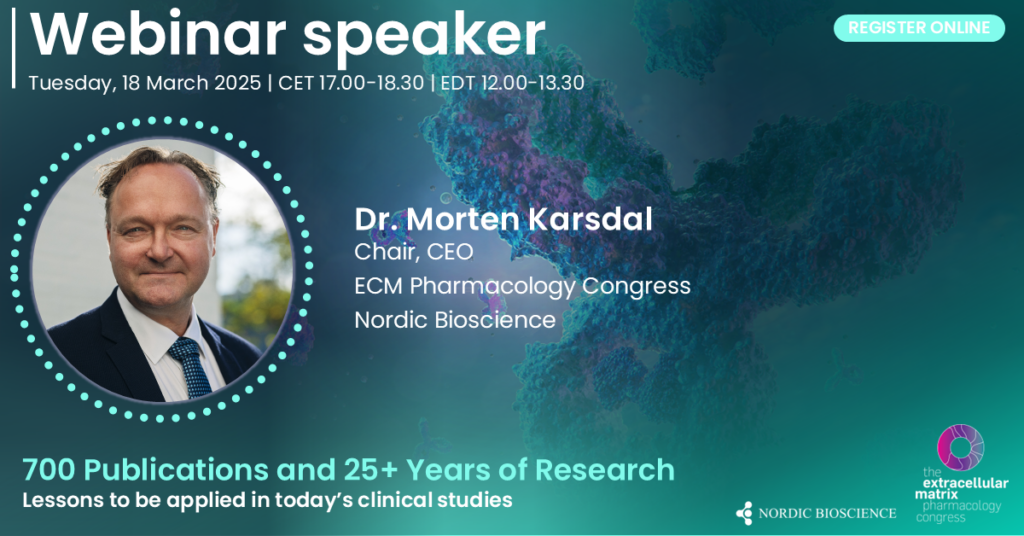
Watch e are excited to invite you to a unique session in the ECM Pharmacology Symposium series, featuring a special presentation by Dr. Morten Karsdal, the Chair of the ECM Pharmacology Congress. This webinar will take us on a journey through 25 years of groundbreaking research and over 700 publications, highlighting how these insights can be applied in today’s clinical studies to improve patient outcomes.
ECM remodeling is a fundamental driver of more than 50 chronic diseases, contributing to over 35% of deaths in the Western world. To restore organ function, we must understand and quantify ECM turnover—a crucial step in advancing patient care.
In this webinar, Dr. Karsdal will highlight the most influential findings from global collaborations and his own research, focusing on the balance between tissue formation and degradation in both healthy and diseased organs. With three letters of support from the FDA over the past three years emphasizing ECM biomarkers, this session will showcase real-world applications of ECM modeling in patient treatment.
Dr. Karsdal will share key findings from his own research and collaborations, highlighting how the structure of healthy organs changes when affected by disease. By examining the balance between tissue formation and degradation, we gain crucial insights into the progression of chronic diseases. The common mechanisms of ECM turnover in the lungs, liver, heart, kidneys, skin, joints, and intestines also apply to solid tumors, making ECM modulation a critical factor in treatment strategies. With FDA letters of support emphasizing ECM biomarkers and turnover, this session will showcase compelling real-world examples of how controlling ECM remodeling can directly benefit patients.
Scientific topics
We prepared nine key topics of the most prominent ECM research of the past 25+ years that you can apply in today’s clinical research.
These topics will explore how ECM remodeling influences disease progression, the role of biomarkers in precision medicine, and the impact of targeted interventions across multiple chronic conditions.
1. The central role of ECM remodeling in over 50 diseases
Diagnostic, prognostic and pharmacodynamic biomarkers of pathological remodeling of the basement membrane and interstitial ECM
Which pathologies are tissue formation or tissue destruction disorders?
How may we use that to improve clinical study design and patient segregation – Key lessons learn from 25 years of biomarker research
2. Collagen formation outperforms liver biopsies in predicting outcome
Collagen formation provides independent prognostic information in addition to the biopsies
The difference between disease status and activity
3. Linking human genetic mutations to skin diseases
Human genetic mutations linked to collagen type 6, 7 and 17 in systemic sclerocis (SSC), hidradenitis suppurutiva (HS), and atopic dermatitis (AD).
4. Doubling of response rates in solid tumors by serological assessment
Doubling of response rates in solid tumors by serological assessment of type 3,5,8,11 and 12 collagens
The myCAF collagens
5. The collagen hormone Endotrophin & the cardio-renal axis in the metabolic syndrome
Understanding the organ death trajectory in obesity/metabolic syndrome of the heart, kidney and liver
Endotrophin predicts outcome in CKD and HFpEF
Understanding fibroblast activities as the central common denominator for outcomes
6. Endotyping fibrostenosis with genetically validated biomarkers
Deconstructing IBD endotypes with human genetically validated biomarkers & biomarkers related to endoscopy scores and remission
7. Quantifying tissue destruction in auto-immune disorders
We need to stop tissue destruction to be efficacious and reach ACR100 scores
8. Respiratory diseases in COPD and IPF
Linking endotypes with disease trajectories that are treatable and actionable in drug development
Elastin and collagen degradation/formation are prognostic for exacerbations, decline of lung function and death
9. Identification of treatable and druggable endotypes in osteoarthritis
The difference between an illness and disease
Providing better drug development paths for selected treatments.
Dr. Morten Karsdal
Dr. Morten Karsdal joined Nordic Bioscience in 2001 and became CEO in June 2010, leading the company to significant advancements in biomarker development and disease biology.
Dr. Karsdal is a KOL in extracellular matrix research, with more than 700 publication and an impressive H-factor of 100.
Dr. Karsdal is an honorary professor of inflammation research at the University of Southern Denmark, where he continues to supervise PhD students, fostering the next generation of researchers.
Dr. Karsdal chairs the Extracellular Matrix Pharmacology Congress, an important forum for advancing drug development by focusing on the extracellular matrix (ECM) as a key factor in most chronic diseases. He is renowned for his deep expertise in fibrosis, rheumatology (including rheumatoid arthritis and osteoarthritis), diabetes, and other chronic conditions, particularly in relation to ECM and biomarker research.
Dr. Karsdal has led the development of FDA-approved and supported molecular diagnostics, as well as more than 100 commercialized biomarker assays, including ELISA assays and high precision automated platforms.
He has extensive experience in clinical trial design and the clinical application of biochemical markers, often serving as a consultant to major pharmaceutical companies for the use of serological biomarkers in clinical trials.
In 2016, he and his research team authored the first edition of “Biochemistry of Collagens, Laminins and Elastin,” published by Elsevier Science. The book, now in its 3rd edition as of 2023, is a key resource on collagens and structural proteins, with a focus on their applications in chronic diseases.
Get in touch
Are you interested in exploring collaboration possibilities? Enter your information in the form and a representative will contact you shortly.
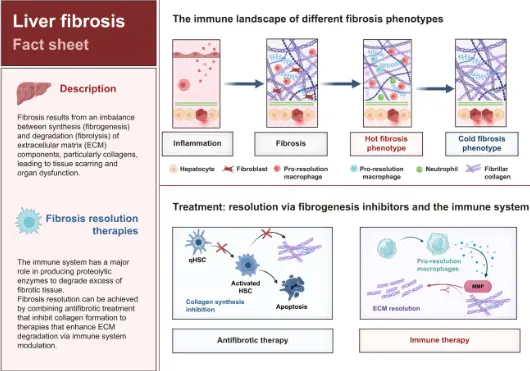
We recently published an open assess review, where we and our collaborators have investigated the novel concept of “hot” and “cold” fibrosis—published in the Journal of Hepatology.
The novel concept of “hot” and “cold” fibrosis refers to the immune status within fibrotic tissues and the nature of fibrogenic signaling
Fibrosis is a pathological condition characterized by excessive accumulation of extracellular matrix (ECM) components, particularly collagens, leading to tissue scarring and organ dysfunction. The concept of “hot” and “cold” fibrosis has recently emerged to help understanding the immune landscape within fibrotic tissues and how ECM and immune cell interactions could be new targets for future fibrosis treatment.
This review provides a new angle of describing fibrosis as “hot” or “cold”, which refers to the immune status within fibrotic tissues and the nature of fibrogenic signaling. Whereas hot fibrosis is characterized by active immune cell infiltration and inflammation, cold fibrosis is associated with auto- and paracrine myofibroblast activation, immune cell exclusion and quiescence.
We demonstrate that pharmacodynamic biomarkers reflecting ECM remodeling are promising tools to monitor fibrotic and inflammatory processes in hepatic diseases, allowing to identify disease profiles associated either with hot or cold fibrosis. This also enables tailored strategies—such as combining anti-fibrotic drugs with immune-stimulating therapies—to optimize treatment efficacy.
Article: Hot and cold fibrosis: The role of serum biomarkers to assess immune mechanisms and ECM-cell interactions in human fibrosis
September is pulmonary fibrosis (PF) awareness month—a progressive lung disease that affects over 200,000 people in the United States alone. PF causes scarring of lung tissue, leading to severe breathing difficulties and reduced quality of life.
Pulmonary fibrosis awareness month aims to raise awareness about the effects of this respiratory disease
At Nordic Bioscience, we are dedicated to advancing the development of biomarkers that provide deeper insights into disease progression in pulmonary fibrosis.
Together with our collaborators, we contributed to the Lancet publication: Cluster analysis of blood biomarkers to identify molecular patterns in pulmonary fibrosis: assessment of a multicentre, prospective, observational cohort with independent validation.
This research represents a step forward in identifying endotypes that can help improve the monitoring of the disease and guided therapy, ultimately enhancing patient care.
We hope our findings encourage continued research and collaboration, working together to make a lasting impact!
Assessing disease burden and treatment response in ulcerative colitis (UC) remains challenging, often leading to treatment withdrawal and unresolved disease activity. These challenges highlight the need for better, non-invasive biomarkers to monitor disease activity and predict treatment outcomes.
ECM biomarkers in ulcerative colitis
In our recently published paper “Circulating Extracellular Matrix Products as Indicators of Disease Burden and Predictors of Disease Course in Ulcerative Colitis”, we identified C7M (MMP-9/13-degraded type VII collagen α1-chain), nordicPRO-C3™ (type III collagen formation), and PRO-C22 (turnover of type XXII collagen) as biomarkers of endoscopic disease severity and treatment response in UC.
We found that a combination of nordicPRO-C3™ and PRO-C22 predicted endoscopic outcomes at week 24, while lower levels of C7M and the C3M/nordicPRO-C3™ ratio were associated with endoscopic response. Notably, this is the first time that MMP-mediated type VII collagen degradation has been linked to disease severity in UC, highlighting its potential role in epithelial damage and barrier dysfunction.
These biomarkers provide a non-invasive means to assess transmural disease activity and disease extent, addressing a critical gap in disease burden monitoring. Incorporating these biomarkers into clinical practice could improve UC management by refining diagnostic accuracy for predicting endoscopic response prior to treatment adjustment.
Article: Circulating Extracellular Matrix Products as Indicators of Disease Burden and Predictors of Disease Course in Ulcerative Colitis
Pulmonary fibrosis is a condition characterized by progressive lung scarring, resulting in a median survival of 3–5 years after diagnosis. However, the rate of lung function decline varies widely among patients with different aetiologies, posing substantial challenges in clinical management.
Pulmonary fibrosis is characterized by progressive lung scarring
Currently, no cure exists for pulmonary fibrosis, and pirfenidone and nintedanib, approved for idiopathic pulmonary fibrosis treatment, have partial effects in slowing disease progression and variable tolerability.
This study aimed to classify patients with pulmonary fibrosis according to blood biomarkers to differentiate distinct disease patterns, known as endotypes.
Our findings showed that blood biomarker clustering in pulmonary fibrosis identified three distinct blood biomarker signatures associated with lung function and prognosis, suggesting unique pulmonary fibrosis biomarker patterns. These findings support the presence of pulmonary fibrosis endotypes with the potential to guide targeted therapy development.
Article: Cluster analysis of blood biomarkers to identify molecular patterns in pulmonary fibrosis: assessment of a multicentre, prospective, observational cohort with independent validation
Tuesday the 4th of February is World Cancer Day. At Nordic Bioscience, we are dedicated to developing biomarker solutions that provide valuable insights on cancer, enabling drug developers to improve cancer treatment options.
World cancer day is an international awareness day for spreading knowledge about cancer
In honor of this day, we would like to share a paper by our ontology team, which unveils a promising avenue for harnessing PRO-C12 as a non-invasive serum biomarker, enabling the quantification of type XII collagen fragments in cancer patients.
With increased stiffness and remodeling often driving tumor growth and metastasis, the extracellular matrix (ECM) plays a crucial role in cancer progression.
Produced by cancer-associated fibroblasts (CAFs), type XII collagen is a key regulator of ECM organization, stabilizing type I collagen fibrils, contributing to ECM stiffening, and facilitating a pro-invasive tumor microenvironment (TME). In our study, we developed the PRO-C12 ELISA, a non-invasive tool to monitor type XII collagen fragments in serum that is related to ECM stiffening and CAF activity, providing critical insights into tumor biology and metastasis risk.
By quantifying type XII collagen fragments in serum, clinicians and drug developers gain a powerful tool to non-invasively assess CAF-driven mechanisms. PRO-C12 is relevant for diverse cancer types and stages, paving the way for its integration into diagnostic workflows and clinical trials.
Article: Type XII collagen is elevated in serum from patients with solid tumors: a non-invasive biomarker of activated fibroblasts
Today is Rheumatoid Awareness Day, which we would like to honor by sharing one of our rheumatology teams’ publications from 2024.
Rheumatoid Awareness Day aims to spread awareness about this chronic autoimmune disease
Rheumatoid arthritis is a chronic autoimmune disease characterized by inflammation in multiple articular joints, causing pain, joint damage, and loss in joint function. Despite the successful development of disease-modifying therapies, the heterogeneity of RA means that a significant proportion of patients respond poorly to treatment. Utilizing personalized and predictive biomarkers can optimize treatment efficacy, safety, and cost.
This study explored the link between type VI collagen breakdown and the effectiveness of Tocilizumab (toci), a drug used to treat rheumatoid arthritis (RA). By measuring a specific fragment of degraded type VI collagen (C6M), researchers found that toci treatment reduced C6M levels compared to placebo and that patients who responded well to TCZ showed a greater reduction in C6M. Additionally, lower initial decreases in C6M were associated with a lower likelihood of a good treatment response.
These findings suggest that quantifying type VI collagen turnover could help predict which RA patients will benefit most from TCZ therapy, potentially leading to more personalized treatment approaches.
Article: Changes in type VI collagen degradation reflect clinical response to treatment in rheumatoid arthritis patients treated with tocilizumab