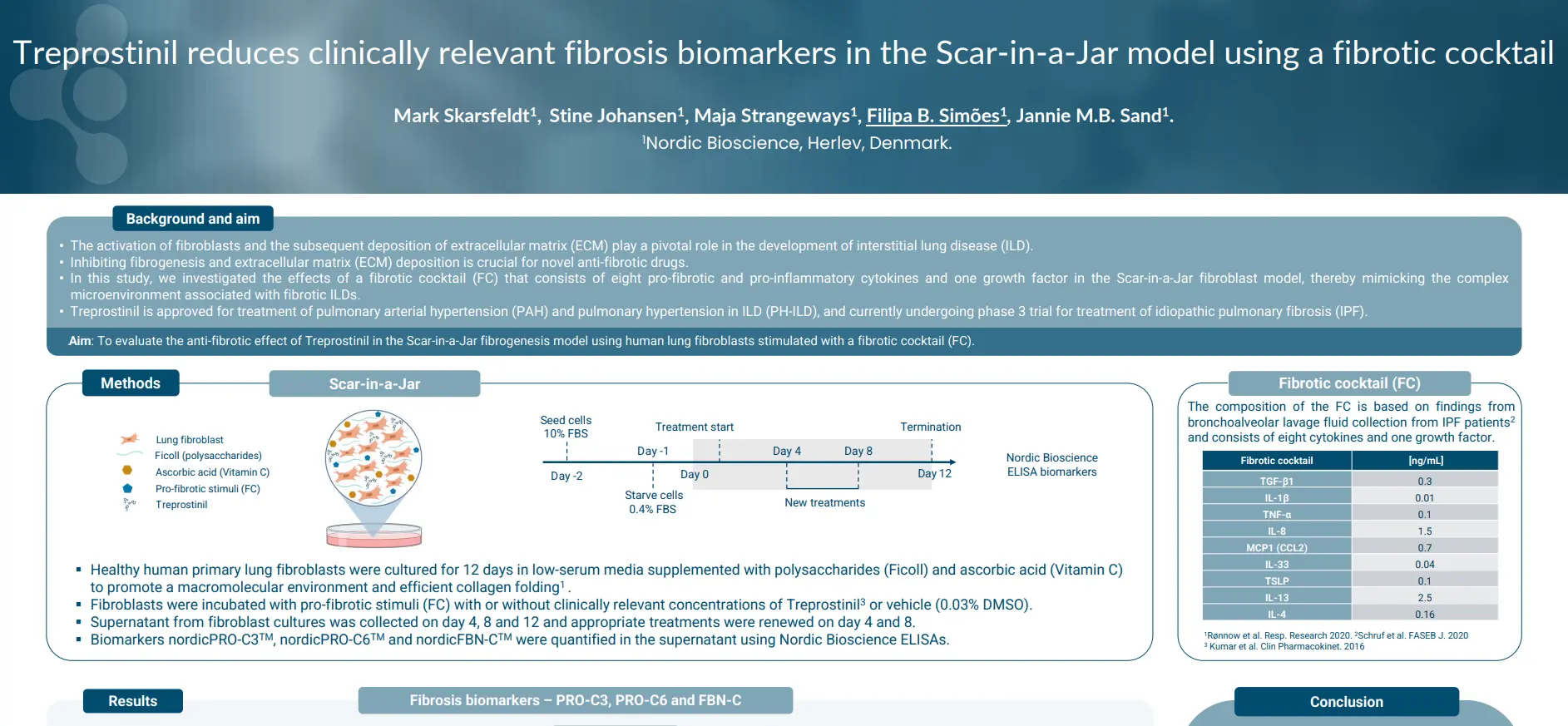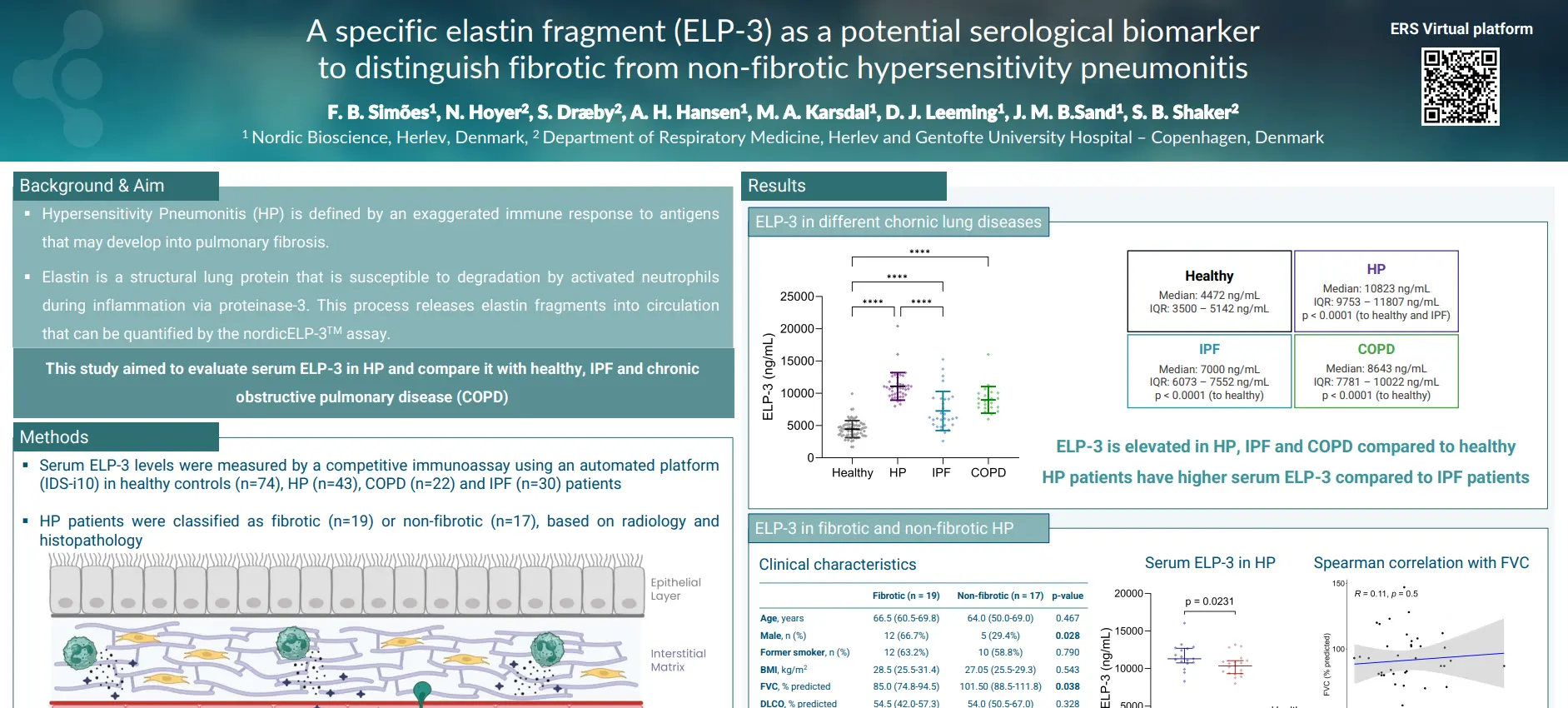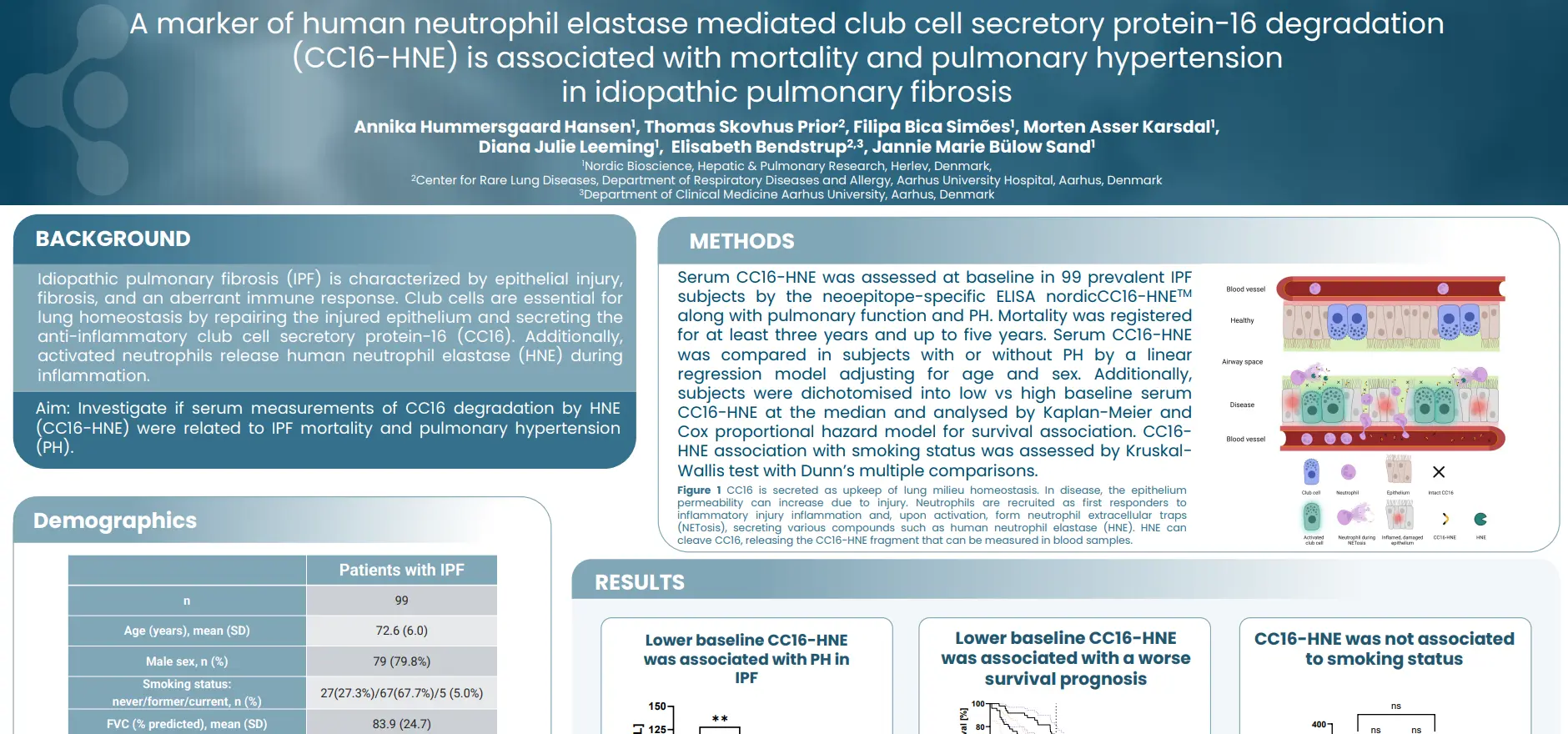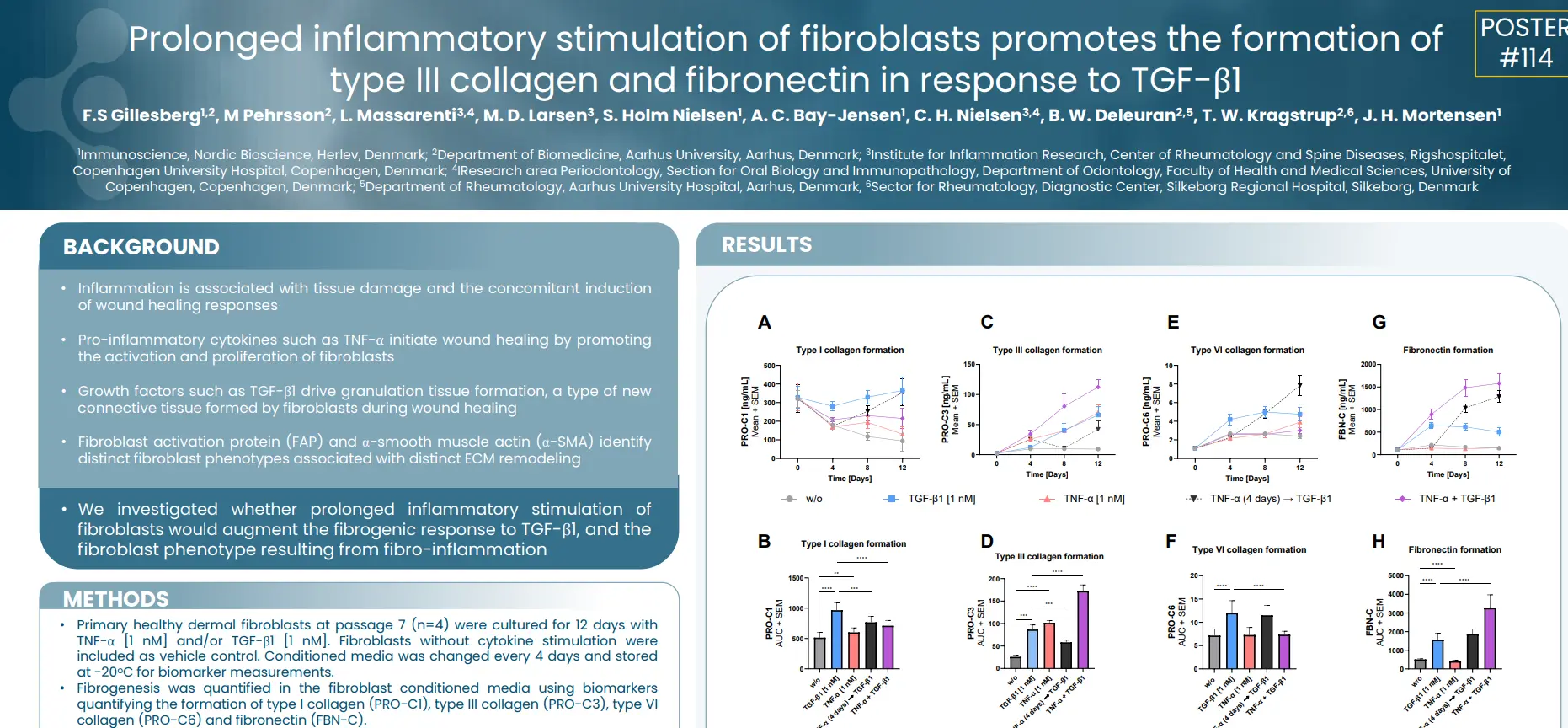
Detecting ECM Turnover in AxSpA Patients with MRI Inflammation and Normal CRP

Detecting Extracellular Matrix Turnover in axSpA Patients with concomitant Inflammation on MRI and Normal CRP

Introduction

Many patients with axial spondyloarthritis (axSpA) present normal CRP levels despite ongoing inflammation in the axial skeleton. The disease is characterized by hallmark features such as erosions and new bone formation, as well as aberrant neutrophil activation. We hypothesize that mechanistic biomarkers reflecting inflammation directly within the axial skeleton may provide a more accurate assessment of disease activity than CRP.

This study aims to investigate the association between the soluble biomarkers nordicCpa9-HNE™, C3M, and nordicPRO-C3™ and MRI-detected inflammation in the sacroiliac joint (SIJ) and spine of axSpA patients.

Poster

Conclusion

NordicCPa9-HNE™, C3M, and CRP demonstrated significant correlations with spine MRI inflammation at baseline. Notably, CPa9-HNE and C3M exhibited superior sensitivity compared to CRP in detecting spine MRI inflammation at week 52. These findings suggest that nordicCPa9-HNE™ and C3M may serve as valuable biomarkers for monitoring disease activity changes in axial spondyloarthritis (AxSpA) with normal CRP.

Get in touch

Are you interested in exploring collaboration possibilities?
Enter your information in the form and a representative will contact you shortly.

    NordicPRO-C3™ as a Predictor of Liver Related Outcomes in Chronic Hepatitis C

    PRO-C3 determined active fibrogenesis is a predictor of liver-related outcomes in patients with chronic hepatitis C

    Introduction

    Patients with untreated chronic hepatitis C (CHC) infection are at increased risk of developing a liver related outcome. Despite the availability of simplified direct-acting antiviral therapy, the prevalence of CHC remains unchanged in many industrialized countries. Biomarkers that can predict which chronic liver disease patients with inflammatory injury are at greatest risk of developing a clinical outcome are required. In this study we aim to investigate the ability of nordicPRO-C3™ as a marker of active fibrogenesis to predict liver-related outcomes compared to METAVIR fibrosis stage on biopsy in patients with hepatitis C.

    Poster

    Conclusion

    We conclude that fibrosis activity (nordicPRO-C3™) is associated with an increased risk of developing a liver-related outcome in patients with untreated HCV infection. NordicPRO-C3™ provides a higher risk predictor for outcomes than METAVIR fibrosis stage on biopsy. A pro-fibrogenic marker such as nordicPRO-C3™ could provide prognostic utility in other chronic liver disease patients with ongoing inflammatory injury.

    Get in touch

    Are you interested in exploring collaboration possibilities?
Enter your information in the form and a representative will contact you shortly.

      NordicPRO-C6™ Is Prognostic for Liver-Related Events in CHC Patients with Cirrhosis

      Fibroblast activity kills – Circulating endotrophin (PRO-C6) is prognostic for liver-related events in patients with cirrhosis from chronic hepatitis C

      Introduction

      Prognostic markers for patients with compensated cirrhosis at increased risk of developing liver-related events are required. Endotrophin, a potential driver of fibroblast activation and mediator of fibroinflammatory disease, may be assessed non-invasively using nordicPRO-C6™. Blood-based collagen extracellular matrix remodeling markers may provide novel prognostic information to identify patients with cirrhosis at higher risk of developing a liver-related event.

      In this study we aimed to investigate the ability of nordicPRO-C6™ to predict liver-related events in The Hepatitis C Antiviral Long-Term Treatment Against Cirrhosis Trial (HALT-C) (ClinicalTrials.gov #NCT00006164).

      Poster

      Conclusion

      NordicPRO-C6™, a biomarker of circulating endotrophin, was primarily associated with an increased risk of developing a liver-related event in patients with cirrhosis from CHC. NordicPRO-C6™ is a potential monitoring blood-based marker that may also provide prognostic information in treatment-naïve CHC patients with moderate-advanced fibrosis at higher risk of developing a liver-related event. The prognostic utility of nordicPRO-C6™ in CHC patients after sustained virologic response and other advanced stage chronic liver disease is required.

      Get in touch

      Are you interested in exploring collaboration possibilities?
Enter your information in the form and a representative will contact you shortly.

        Endotrophin as an Early Marker of Kidney Outcomes in Type 2 Diabetes

        Endotrophin as an early marker of kidney outcomes in persons with type 2 diabetes: Findings from the PROVALID study

        Introduction

        Diabetic kidney disease (DKD) is driven by pathophysiological processes, including fibrosis. NordicEndotrophin™ (ETP), a pro-fibrotic fragment generated during collagen type VI formation, has previously been shown to be a biomarker of DKD progression1,2,3,4,5. The aim of this study was to investigate, for the first time, circulating ETP as a risk marker for kidney outcomes in persons with type 2 diabetes (T2D) being taken care of at the primary level of healthcare.

        Poster

        Conclusion

        Plasma ETP (nordicEndotrophin™) has been identified as an independent risk marker for kidney outcomes in individuals with type 2 diabetes (T2D) with early-stage kidney disease. Higher levels of ETP were associated with a significantly increased risk of developing the kidney endpoint in persons with eGFR >90 ml/min/1.73 m2. These findings demonstrate that markers of fibrosis, such as ETP, may serve as early markers for kidney disease progression or kidney failure in persons with T2D and apparently normal kidney function.

        Get in touch

        Are you interested in exploring collaboration possibilities?
Enter your information in the form and a representative will contact you shortly.

          LG1M Is Prognostic for Long-Term Readmission After AKI

          The novel fibrosis biomarker LG1M is prognostic for long-term readmission after AKI

          Introduction

          Acute Kidney Injury (AKI), survivors are at increased risk of long-term adverse outcomes, including readmission to hospital. Pathophysiological consequences of AKI, include extracellular matrix (ECM) remodeling. Tools to monitor the long-term health risk of patients after AKI are needed to improve
          patient outcome.

          Poster

          Conclusion

          Circulating levels of LG1M were elevated in AKI patients 1 year after the AKI episode and correlated with markers of kidney function in the AKI group and to a lower extent in the CKD control group. In the AKI group, LG1M was associated with the risk of readmission, even though the significance of the association was lost in adjusted analyses. This biomarker, quantifying circulating levels of a laminin fragment, may reflect injury to the basement membrane (of which laminin is a major component) after AKI, which was associated with an increased risk of worse outcome in patients that experienced an episode of AKI.

          Get in touch

          Are you interested in exploring collaboration possibilities?
Enter your information in the form and a representative will contact you shortly.

            Advancing Diagnostic Precision of Emphysema COPD

            Machine-learning classification integrating non-invasive biomarkers, clinical characteristics and pulmonary function

            Introduction

            Computed tomography (CT) is used for evaluating phenotypic abnormalities in chronic obstructive
            pulmonary disease (COPD), yet its cost and time-intensive nature limit routine use. Developing an
            easily implementable technique for classifying emphysema extent is thus essential.

            This study aimed to develop a diagnostic model to classify emphysema extent in COPD
            patients relying solely on easily obtained measures such as clinical characteristics and
            non-invasive biomarkers.

            Poster

            Conclusion

            Diagnostic models incorporating easily obtainable measures effectively distinguished COPD patients with high emphysema extent from those with low extent. Such models for classifying emphysema patterns have the potential for clinical implementation, aiding in diagnosis or serving as a decision-making tool to determine the necessity of further CT scans.

            Get in touch

            Are you interested in exploring collaboration possibilities?
Enter your information in the form and a representative will contact you shortly.

              Data-Driven Comorbidity Profiles in COPD

              Data-driven identification and investigation of comorbidity profiles in patients with chronic obstructive pulmonary disease: a multicohort study

              Introduction

              Comorbidities are common in chronic obstructive pulmonary disease (COPD), adversely affecting
              patients’ quality of life and their disease trajectories. While previous studies have predominantly
              examined individual comorbidities, there has been limited exploration of their coexistence.

              This study aimed to identify comorbidity clusters among real-world cohorts of COPD patients using machine learning techniques, and to investigate clinical characteristics and mortality within these clusters.

              Poster

              Conclusion

              This study confirms distinct comorbidity clusters in two well-characterized cohorts of patients with COPD which can be linked to different patient subgroups. In a broad COPD patient population, comorbidity profiles could hold prognostic relevance. The findings of this study enhance the understanding of the comorbidity landscape in COPD and highlights the importance of comorbidity assessment in clinical management.

              Get in touch

              Are you interested in exploring collaboration possibilities?
Enter your information in the form and a representative will contact you shortly.

                PRO-C11 and PRO-C16 Are Markers of Intestinal Fibrosis – Results from the ImageKids Study

                PRO-C11 and PRO-C16 are markers of intestinal fibrosis and are associated with MRE-confirmed intestinal strictures – Results from the ImageKids study

                Introduction

                Intestinal fibrosis and strictures is one of the most challenging complications in patients with
                Crohn’s disease (CD). There is an urgent medical need for non-invasive serological biomarkers for intestinal fibrosis, as magnetic resonance enterography (MRE) is not a feasible tool for repeated
                monitoring.

                In this study we investigated Protein FingerprintAssays (PFA) biomarkers of collagen formation,
                PRO-C11 (formation of type XI collagen), and PRO-C16 (formation of type XVI collagen) in serum from pediatric CD (pCD).

                Poster

                Conclusion

                Based on these biomarker data from the ImageKids study, PRO-C11 and PRO-C16 demonstrate potential as important non-invasive biomarkers reflecting intestinal fibrosis and stenosis.

                Get in touch

                Are you interested in exploring collaboration possibilities?
Enter your information in the form and a representative will contact you shortly.

                  CPa9-HNE Can Monitor Endoscopic and Clinical Disease Activity in Ulcerative Colitis

                  CPa9-HNE: A neutrophil-derived fragment of calprotectin measured in serum can monitor endoscopic and clinical disease activity in ulcerative colitis

                  Introduction

                  Ulcerative colitis (UC) is a chronic inflammatory bowel disease (IBD) presenting in remitting ulcerations of the colonic mucosa and submucosa. Mucosal healing is therefore an important treatment target for optimal disease management. Fecal calprotectin is commonly used to monitor mucosal healing –
                  however, patient compliance is low due to a preference for serological markers.

                  In this study we aimed to investigate the association of serum calprotectin [CPa9-HNE], a non-invasive neo-epitope biomarker of true neutrophil activity, with both clinical and endoscopic disease activity in UC.

                  Poster

                  Conclusion

                  CPa9-HNE accurately reflected both clinical and endoscopic disease activity in ulcerative colitis, based on the UCEIS and full Mayo score. These findings highlight the potential use of CPa9-HNE as a non-invasive tool to monitor both endoscopic and clinical disease activity in UC, with the potential of guiding treatment decisions and better aligning with patient preferences.

                  Get in touch

                  Are you interested in exploring collaboration possibilities?
Enter your information in the form and a representative will contact you shortly.

                    Single Joint Tissue Destruction Biomarkers

                    Single joint tissue destruction biomarkers: association between type III collagen degradation and local tissue damage of a single joint

                    Introduction

                    The landscape of osteoarthritis (OA) research and therapeutic development has undergone significant transformation, shifting from a primarily structural focus to an emphasis on patient-reported outcomes (PROs). Pain, which primarily originates from the soft tissue of the joint, is intricately linked with the structural integrity of joint tissues. Serological biomarkers are considered potential surrogate endpoints, but their contribution from single joints to systemic levels in OA patients is unclear.

                    This study explored systemic biomarker levels’ response to tissue damage and healing in patients undergoing knee or hip joint replacement revision for aseptic failure, compared to patients with chronic pain from a joint replacement, but not receiving surgery.

                    Poster

                    Conclusion

                    C3M degradation was found to increase in response to tissue insult to the joint from revision surgery, while no change was observed in a non-surgical group with chronic pain of the joint over 6 months. The increase and gradual decrease throughout the study period indicate a relationship between systemic levels of type III collagen degradation fragments and soft-tissue destruction and inflammation of the joint.

                    Get in touch

                    Are you interested in exploring collaboration possibilities?
Enter your information in the form and a representative will contact you shortly.