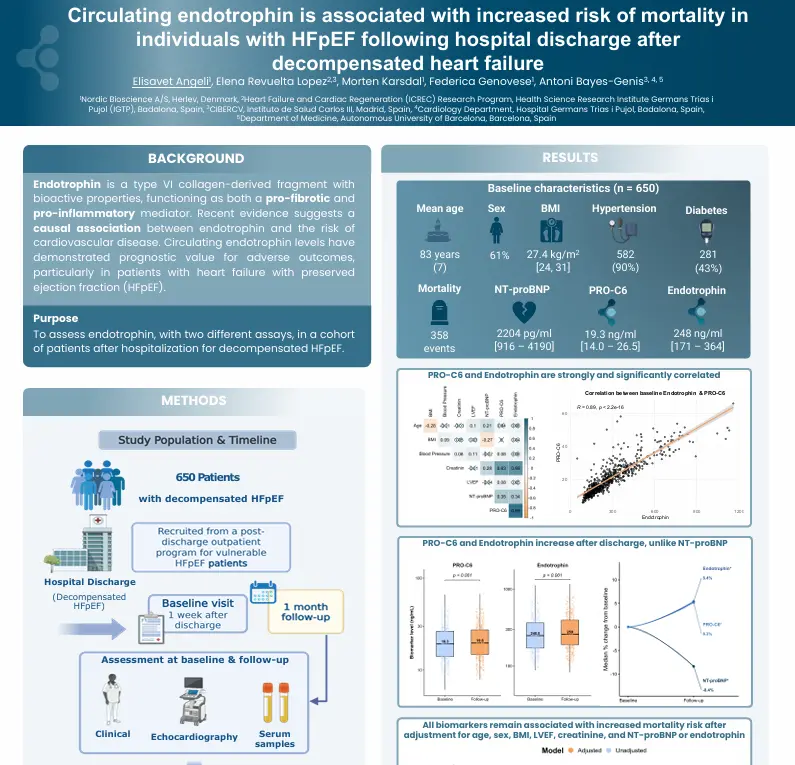
Circulating endotrophin is associated with increased risk of mortality in individuals with HFpEF following hospital discharge after decompensated heart failure
Introduction
Endotrophin is a type VI collagen-derived fragment with bioactive properties, functioning as both a pro-fibrotic and pro-inflammatory mediator. Recent evidence suggests a causal association between endotrophin and the risk of cardiovascular disease. Circulating endotrophin levels have demonstrated prognostic value for adverse outcomes, particularly in patients with heart failure with preserved ejection fraction (HFpEF). To assess endotrophin, with two different assays, in a cohort of patients after hospitalization for decompensated HFpEF.
Endotrophin levels show dynamic changes early after discharge and are independently associated with all-cause mortality. The observed associations suggest that endotrophin may capture complementary pathophysiological information beyond established clinical risk factors. These findings support further investigation of endotrophin as a component of multidimensional risk stratification in HFpEF.
Get in touch
Are you interested in exploring collaboration possibilities? Enter your information in the form and a representative will contact you shortly.
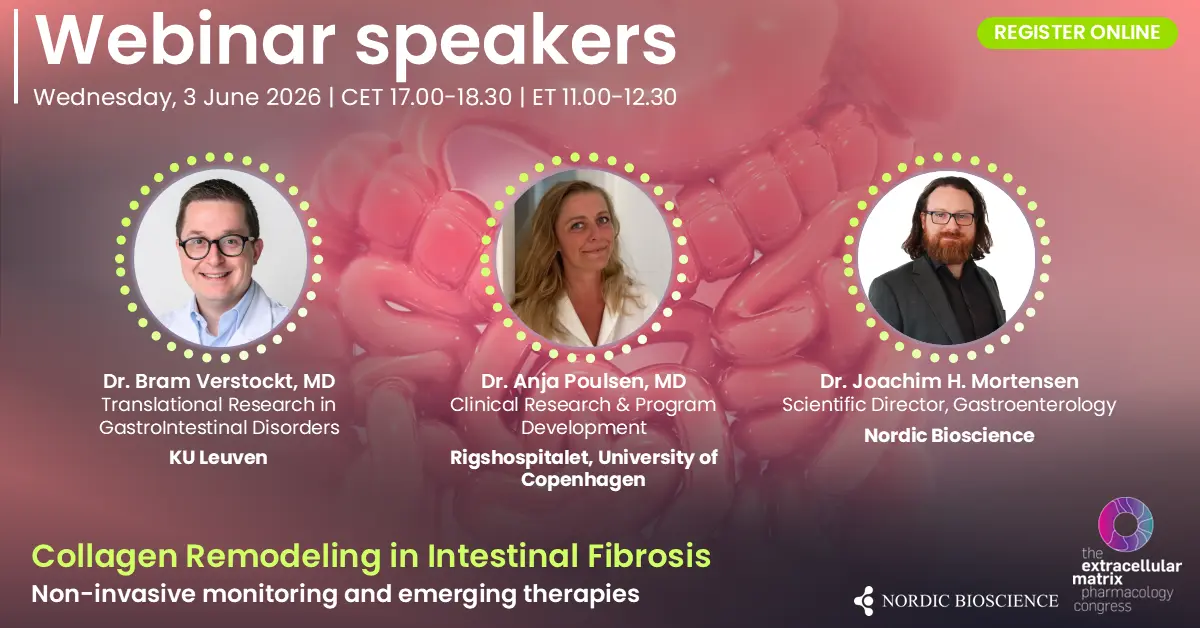
Collagen Remodeling in Intestinal Fibrosis: Non-invasive monitoring and emerging therapies
Overview
Watch the replay of this webinar to learn more about intestinal fibrosis n inflammatory bowel disease, with a focus on extracellular matrix remodeling, collagen biomarker assessment, and emerging therapeutic strategies for fibrostenotic complications in Crohn’s disease and ulcerative colitis.
Agenda
Introduction and welcome | Prof. Dr. Morten Karsdal
Navigating the Intestinal fibrosis landscape | Dr. Bram Verstockt
Fibro-inflammation in IBD | Dr. Joachim H. Mortensen
Emerging collagen biomarkers for fibrostenotic Crohn’s disease and ulcerative colitis | Dr. Anja Poulsen
Scientific topics
Intestinal fibrosis is a major complication of inflammatory bowel disease, particularly Crohn’s disease, where persistent inflammation and dysregulated tissue repair can lead to excessive extracellular matrix deposition, bowel wall thickening, and fibrostenotic disease. Despite its clinical impact, intestinal fibrosis remains difficult to monitor non-invasively, and effective anti-fibrotic treatment options are still limited.
This webinar explores the evolving intestinal fibrosis landscape, including the role of fibro-inflammation, extracellular matrix remodeling, and collagen turnover in disease progression. Particular focus is placed on how serological biomarkers may support non-invasive assessment of mucosal damage, intestinal fibrosis, and fibrostenotic complications in Crohn’s disease and ulcerative colitis.
By highlighting advances from the FibroTarget consortium, emerging collagen biomarkers, and novel therapeutic approaches, the webinar addresses how improved disease monitoring and targeted anti-fibrotic strategies may help change the current status quo in IBD management.
Dr. Bram Verstockt is a Principal Investigator and Assistant Professor at KU Leuven and a staff member of the IBD team within the Department of Gastroenterology and Hepatology at University Hospitals Leuven.
He specializes in the care of patients with inflammatory bowel disease (IBD) and leads the multidisciplinary IBD clinic in close collaboration with colorectal surgeons and the broader IBD care team.
Dr. Verstockt is a pioneer of intestinal ultrasound (IUS) in Belgium and became the country’s first ECCO-ESGAR certified IUS specialist after advanced fellowship training at Lüneburg University.
His research focuses on non-invasive disease monitoring in IBD, with particular emphasis on intestinal ultrasound, imaging optimization, radiomics, and artificial intelligence.
He completed a PhD entitled “Predicting outcome in inflammatory bowel diseases: a multi-omics approach – creating opportunities for personalised medicine”, supported by the Flemish Foundation for Scientific Research (FWO).
His translational research integrates multi-omics approaches, proteomics, biomarkers, and organoid models to better understand IBD heterogeneity, including fibrostricturing disease, perianal disease, and fatigue.
Dr. Verstockt is co-founder of the COLLIBRI proteomics consortium, advancing biomarker discovery and precision medicine in IBD.
He has held major international leadership roles, including Chair of Y-ECCO, Chair of the IBUS Scientific Committee, and currently serves on multiple ECCO, IBUS, and Belgian IBD scientific boards.
He is Associate Editor of the Journal of Crohn’s and Colitis and an active reviewer for leading journals, funding bodies, and international conferences.
His achievements have been recognized with numerous awards, including the ECCO Young Investigator Award (2025)and the UEG Rising Star distinction (2025), highlighting his impact on translational gastroenterology and IBD research.
Dr. Anja Poulsen
Dr. Anja Poulsen is a gastroenterologist specializing in inflammatory bowel disease (IBD), with more than 15 years of clinical experience.
Her work combines advanced patient care with translational research, clinical trial development, and implementation of novel therapies.
She focuses on improving outcomes for patients with Crohn’s disease, ulcerative colitis, fistulizing disease, microscopic colitis, and intestinal fibrostenosis.
Dr. Poulsen is Founder and Lead of the CD-FIB initiative, a translational research program focused on fibrostenosing Crohn’s disease and progression to end-stage intestinal damage.
The CD-FIB program integrates clinical data, imaging, biobanking, tissue analysis, and serological biomarkers.
Her research emphasizes biomarker-driven endpoints for clinical trials, disease stratification, and monitoring of intestinal fibrosis progression.
She has strong expertise in clinical trial design, evaluation of emerging treatments, program development, and research infrastructure.
Dr. Poulsen is IBUS certified in intestinal ultrasound and uses it routinely in clinical practice.
She works across multidisciplinary collaborations to connect clinical care, data-driven research, and translational biomarker development.
Her work is closely aligned with ECM-focused research through its emphasis on fibrosis, intestinal tissue remodeling, and objective markers of disease progression.
Dr. Joachim H. Mortensen
Dr. Mortensen joined Nordic Bioscience in 2013 and currently serves as Head of Department of Gastrointestinal Diseases.
The group’s research activities span from biomarker discovery to preclinical and clinical trial exploration focusing on the development and validation of blood-based biomarkers to quantify fibro-inflammation which covers neutrophil activity, mucosal damage and intestinal fibrosis in serum of patients with gastrointestinal diseases e.g. inflammatory bowel disease.
The group’s primary focus is to evaluate pharmacodynamics changes, efficacy and monitoring of response to various treatments using biomarkers reflecting fibro-inflammation.
Biomarkers are developed to support and understand fibro-inflammation-associated IBD disease progression and response to treatment, where the biomarkers are applied from target selection to clinical trial monitoring.
This webinar is hosted co-hosted together with the International Society of Extracellular Matrix Pharmacology.
Can baseline blood markers of skin-barrier disruption help identify patients who are more likely to respond?
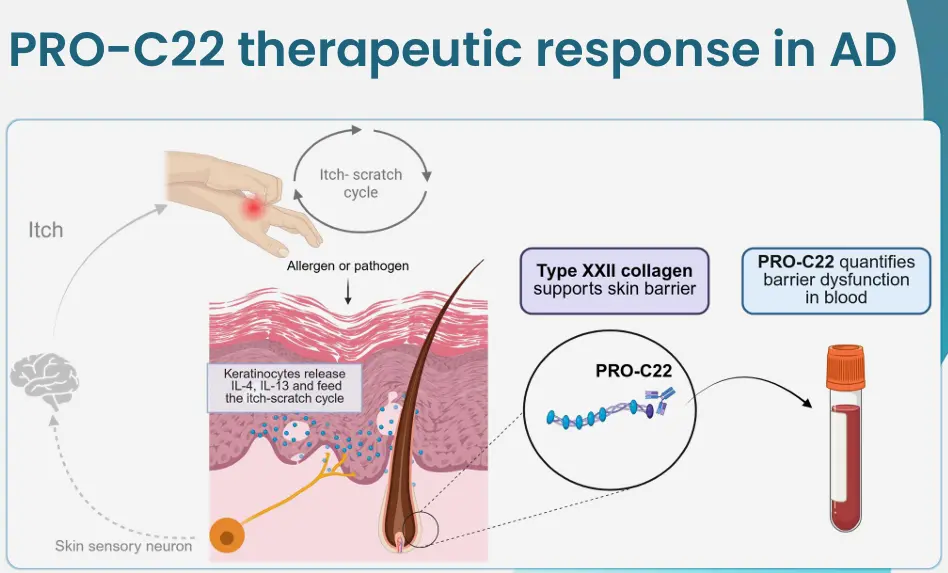
Atopic dermatitis (AD) is marked by a dysfunctional skin barrier and chronic itch, largely driven by cytokines such as IL-4 and IL-13 produced by keratinocytes. Scratching worsens skin barrier function and causes damage and perpetuate the itch–scratch cycle.
At the same time, type XXII collagen is found in the junction where the hair follicle attaches to the dermis, functioning as a cell adhesion ligand, linking the epithelial cells and fibroblasts to the extracellular matrix. This interaction allows the integrity of the tissue junction.
This is why we have investigated the biomarker PRO-C22 that precisely quantifies type XXII collagen in blood. We found that higher levels of PRO-C22:
Correlate with itch severity
Reflect treatment response to biological treatment
Our investigation has shown that the blood-based PRO-C22 biomarker can offer new insights into barrier-related pathology and therapeutic response in AD.
From Heterogeneity to Biology: ECM Remodeling and Precision Trials in Pulmonary Diseases
Overview
Watch this webinar to explore whether current approaches truly capture the underlying biology of pulmonary diseases such as COPD and lung cancer. This session focuses on extracellular matrix (ECM) remodeling as a central disease mechanism, its role in disease heterogeneity, and how ECM-derived biomarkers may support precision trials and improved prognostic assessment.
Agenda
Welcome and introduction
COPD heterogeneity and extracellular matrix remodeling as a core disease mechanism
ECM biomarkers as tools for disease activity and prognosis – Assessing critical pathways of disease
From COPD to Lung Cancer – The ECM as a pro-tumor environment
Chronic obstructive pulmonary disease is traditionally defined and monitored using functional parameters such as airflow limitation. However, COPD is biologically heterogeneous, reflecting distinct pathological processes that are not fully captured by spirometry alone. Structural remodeling of the extracellular matrix (ECM) is increasingly recognized as a central mechanism underlying disease progression.
Persistent inflammation, protease–antiprotease imbalance, and dysregulated tissue repair drive continuous ECM turnover in the lungs. This remodeling alters airway structure, contributes to emphysematous destruction, and shapes the microenvironment that sustains chronic disease activity. Understanding these matrix-driven processes provides a biologically grounded framework for redefining disease subtypes.
ECM-derived biomarkers offer the potential to quantify ongoing tissue remodeling in real time. By reflecting specific collagen formation and degradation pathways, these biomarkers may enable improved assessment of disease activity, stratification of patients, and evaluation of therapeutic response in precision clinical trials.
Beyond COPD progression, ECM remodeling also influences the broader pulmonary microenvironment. Altered matrix composition and stiffness can create conditions that support tumor initiation and growth, linking chronic lung disease biology to lung cancer risk. Exploring the ECM as a pro-tumor niche expands the discussion from chronic inflammation to oncogenic transformation.
This webinar examines how shifting focus from symptoms and physiology to measurable biology may redefine endpoints, improve patient selection in trials, and advance precision medicine in COPD.
Dr. Janette Burgess is Professor of Extracellular Matrix in Disease Pathogenesis at the University Medical Center Groningen and a Rosalind Franklin Fellow.
Her research focuses on the role of the extracellular matrix (ECM) in lung diseases, particularly how structural changes in lung tissue and airways drive disease development and progression.
She investigates whether ECM alterations are causal drivers or consequences of pathology in chronic lung conditions.
Dr. Burgess leads translational research integrating primary human lung cells, patient tissue samples, and clinical data to characterize ECM remodeling.
Her group employs advanced in vitro models, ex vivo human lung tissue systems, and high-resolution microscopy to study ECM regulation and mechanics.
She is embedded within the Groningen Research Institute for Asthma and COPD (GRIAC), contributing to interdisciplinary respiratory research.
Her work aims to identify ECM-driven mechanisms as therapeutic targets for lung diseases affecting large patient populations.
Dr. Burgess is actively involved in international scientific leadership, including chairing and speaking at major conferences such as the European Respiratory Society Lung Science Conference.
She has received multiple recognitions, including the Solbert Permutt Trailblazer Award (2025) and Fellowship of the American Thoracic Society (2021).
In addition to research, she contributes to education and mentorship in matrix biology and tissue regeneration at the graduate level.
This webinar is hosted co-hosted together with the International Society of Extracellular Matrix Pharmacology.
Dr. Diana Julie Leeming
Dr. Diana Julie Leeming is the Senior Director of Fibrosis, Hepatic, and Pulmonary Research at Nordic Bioscience.
She joined Nordic Bioscience in 2004 and assumed the role of Director of Fibrosis in 2010, later being promoted to Senior Director in 2024.
Dr. Leeming focuses on developing serologically assessed markers to evaluate extracellular matrix remodeling in patients with pulmonary or hepatic fibrosis, aiding in diagnosis and pharmacodynamic evaluation.
She is a principal inventor of the PRO-C3 assay, a fibrogenesis marker utilized in multiple clinical trial studies.
Dr. Leeming has authored over 280 peer-reviewed publications, demonstrating her extensive contributions to the field.
Her H-index is 69, her I10-index is 195, and her research has garnered over 15,736 citations as of February 2026.
Dr. Martin Pehrsson
Dr. Martin Pehrsson, a Senior Scientist and Scientific Alliance Manager working with Pulmonary Research at Nordic Bioscience.
He joined Nordic Bioscience in 2017, assumed the role of Senior Scientist in 2023 and Manager in 2025.
Dr. Martin Pehrsson focuses on the application of extracellular matrix remodeling biomarkers in clinical trials of patients with respiratory diseases, such as IPF and COPD, aiding in mode of action and pharmacodynamic evaluation.
He was part of the initial development of the CTX-III biomarker, a marker used to assess fibrosis resolution.
Dr. Martin Pehrsson has authored 38 peer-reviewed publications with an H- and i10-index of 8 and 287 citations as of April 2026
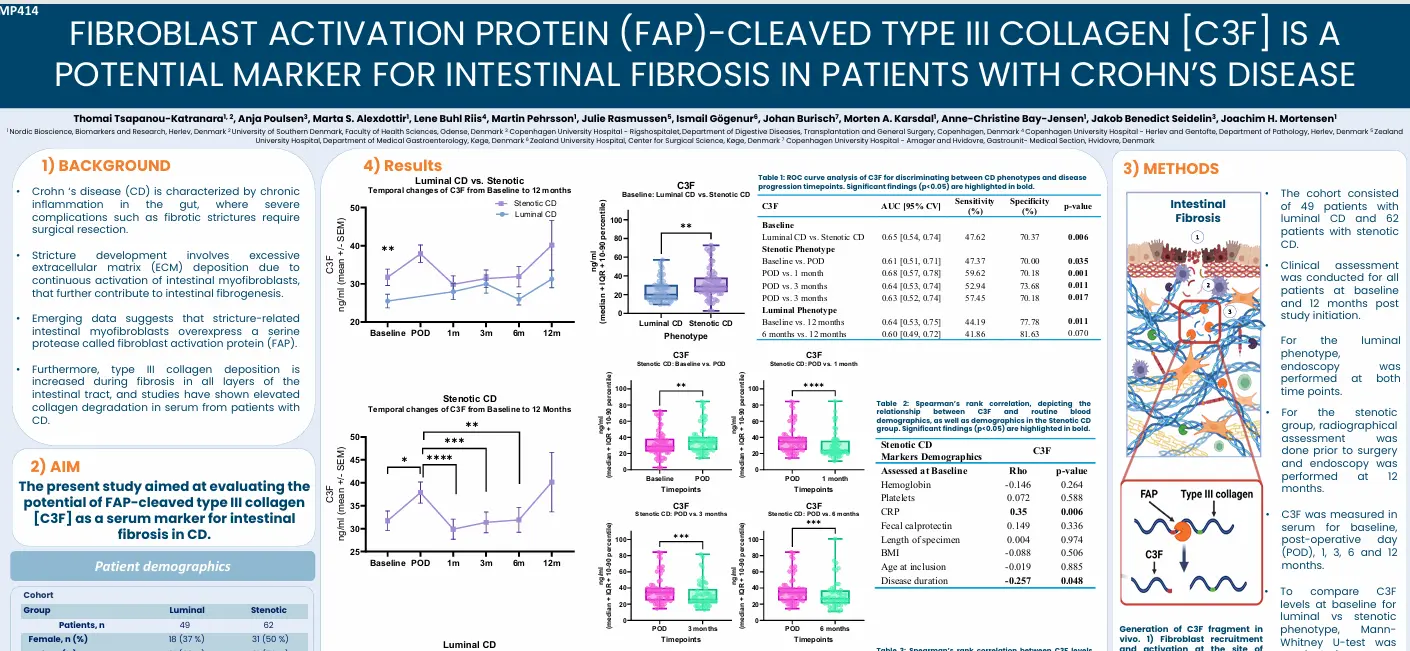
Fibroblast Activation Protein (FAP)-Cleaved Type III Collagen (C3F) is a Potential Marker for Intestinal Fibrosis in Patients with Crohn’s Disease
Introduction
Crohn’s disease (CD) is characterized by chronic inflammation in the gut, where severe complications such as fibrotic strictures require surgical resection. The stricture development involves excessive extracellular matrix (ECM) deposition due to continuous activation of intestinal myofibroblasts, that further contribute to instestinal fibrogenesis. Emerging data suggests that stricture-related intestinal myofibroblasts overexpress a serine protease called fibroblast activation protein (FAP). Furthermore, type III collagen deposition is increased during fibrosis in all layers of the intestinal tract, and studies have shown elevated collagen degradation in serum from patients with CD.
This study aimed to evaluate the potential of FAP-cleaved type III collagen (C3F) as a serum marker for intestinal fibrosis in CD.
C3F is elevated in patients with stenotic CD compared to luminal CD at baseline and remains elevated after surgical resection, suggesting that C3F reflects fibroblast activity during fibrostenosis and tissue remodeling following surgery. In patients with luminal CD, C3F levels were significantly higher, and early C3F levels (baseline, 3 months and 6 months) were significantly positively associated with ileal stenosis assessed at 12 months. This suggests that increased C3F may be predictive of future endoscopic disease activity or even a potential relapse.
Concluding, the findings of this study highlight the potential use of C3F as a novel biomarker for intestinal fibrosis in CD.
Get in touch
Are you interested in exploring collaboration possibilities? Enter your information in the form and a representative will contact you shortly.
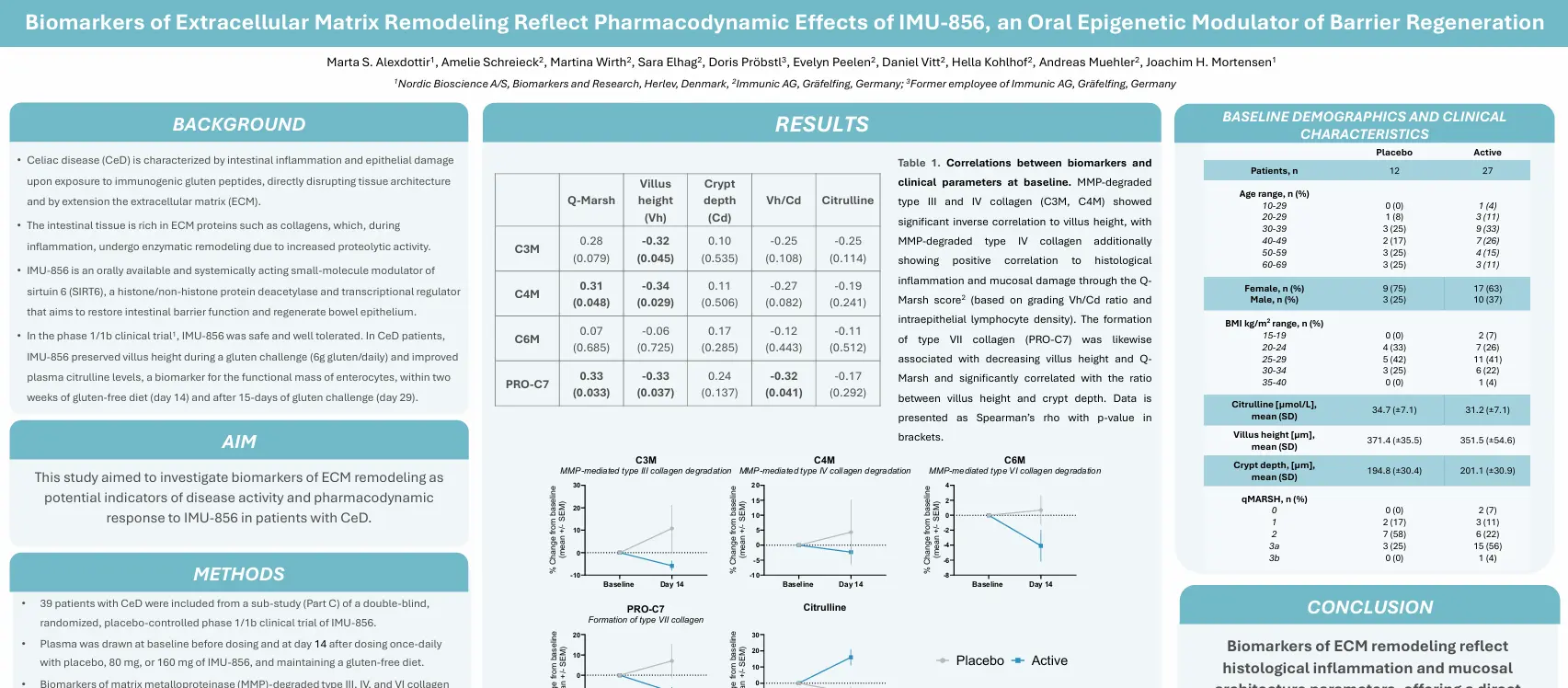
Biomarkers of Extracellular Matrix Remodeling Reflect Pharmacodynamic Effects on IMU-856, an Oral Epigenetic Modulator of Barrier Regeneration
Introduction
Celiac disease (CeD) is characterized by intestinal inflammation and epithelial damage upon exposure to immunogenic gluten peptide, directly disrupting tissue architecture and by extension the extracellular matrix (ECM). The intestinal tissue is rich in ECM proteins such as collagens, which, during inflammation, undergo enzymatic remodeling due to increased proteolytic activity.
IMU-856 is an orally available and systematically acting small-molecule modulator of sirtuin 6 (SIRT6), a histone/non-histone protein deacetylase and transcriptional regulator that aims to restore intestinal barrier function and regenerate bowel epithelium.
This study aimed to investigate biomarkers of ECM remodeling as potential indicators of disease activity and pharmacodynamic response to IMU-856 in patients with CeD.
Biomarkers of ECM remodeling reflect histological inflammation and mucosal architecture parameters, offering a direct insight into intestinal barrier integrity. These biomarkers potentially reflect treatment-induced improvement in intestinal tissue remodeling upon treatment with IMU-856.
Get in touch
Are you interested in exploring collaboration possibilities? Enter your information in the form and a representative will contact you shortly.
How can a simple blood sample track the progression of Parkinson’s disease?
Parkinson’s disease is a neurological condition that affects the brain and other parts of the nervous system. This animation explores the complex neurodegenerative processes occurring within the brain’s substantia nigra and the groundbreaking role of alpha-synuclein fragments as biomarkers.
Watch this video to learn about the fragmentation of alpha-synuclein, the breakdown of the blood-brain barrier, and how blood-based biomarkers can help identify patients at risk of progression and track treatment response.
Get in touch
Are you interested in exploring collaboration possibilities? Enter your information in the form and a representative will contact you shortly.
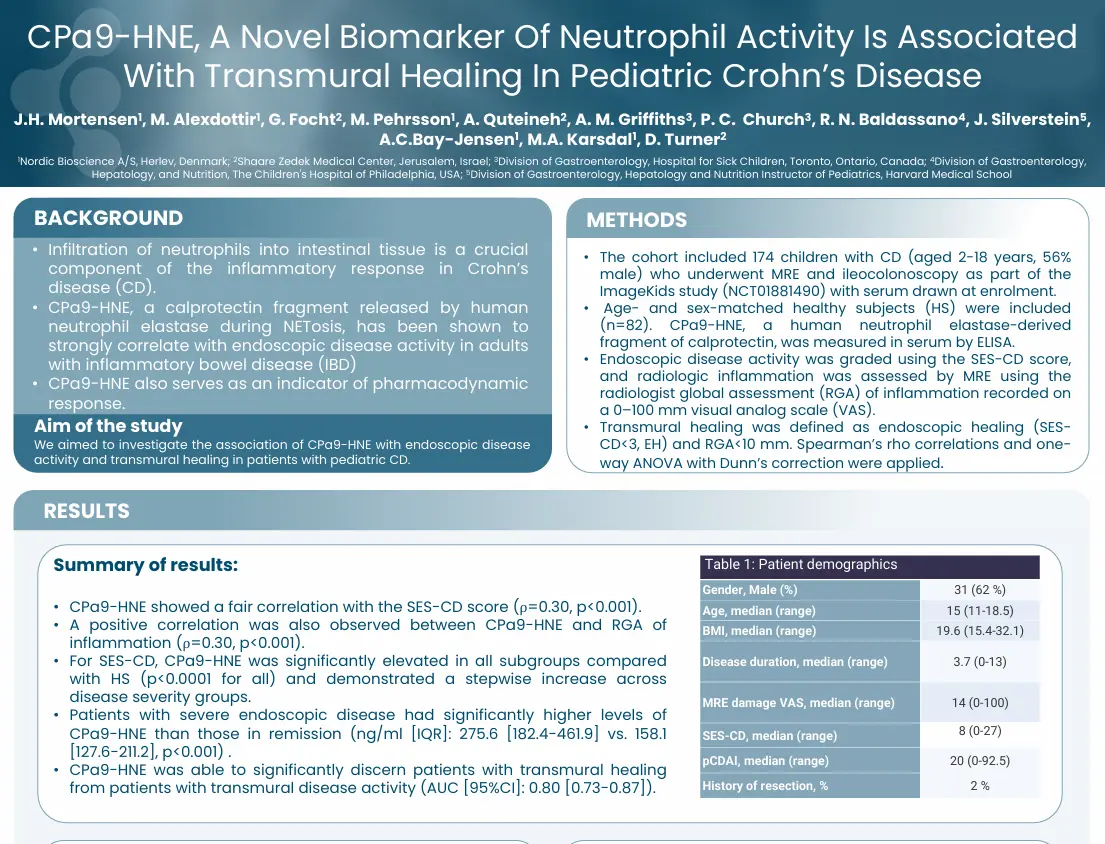
NordicCPa9™, a biomarker of neutrophil activity is associated with transmural healing in pediatric Crohn’s disease
Introduction
CPa9-HNE (nordicCPa9™), a calprotectin fragment released by human neutrophil estate during NETosis, has been shown to strongly correlate with endoscopic disease activity in adults with inflammatory bowel disease (IBD). NordicCPa9™ also serves as an indicator of pharmacodynamic response. This study aimed to investigate the association of nordicCPa9™ with endoscopic disease activity and transmural healing in patients with pediatric CD.
This study showed that nordicCPa9™, a biomarker of neutrophil activity, is associated with mucosal and radiologic mucosal damage in pediatric CD. These findings highlight the potential use of CPa9-HNE as a complementary tool for the endoscopic or radiographic assessment of intestinal mucosal damage/healing and provide an opportunity for further studies in children with CD.
Get in touch
Are you interested in exploring collaboration possibilities? Enter your information in the form and a representative will contact you shortly.
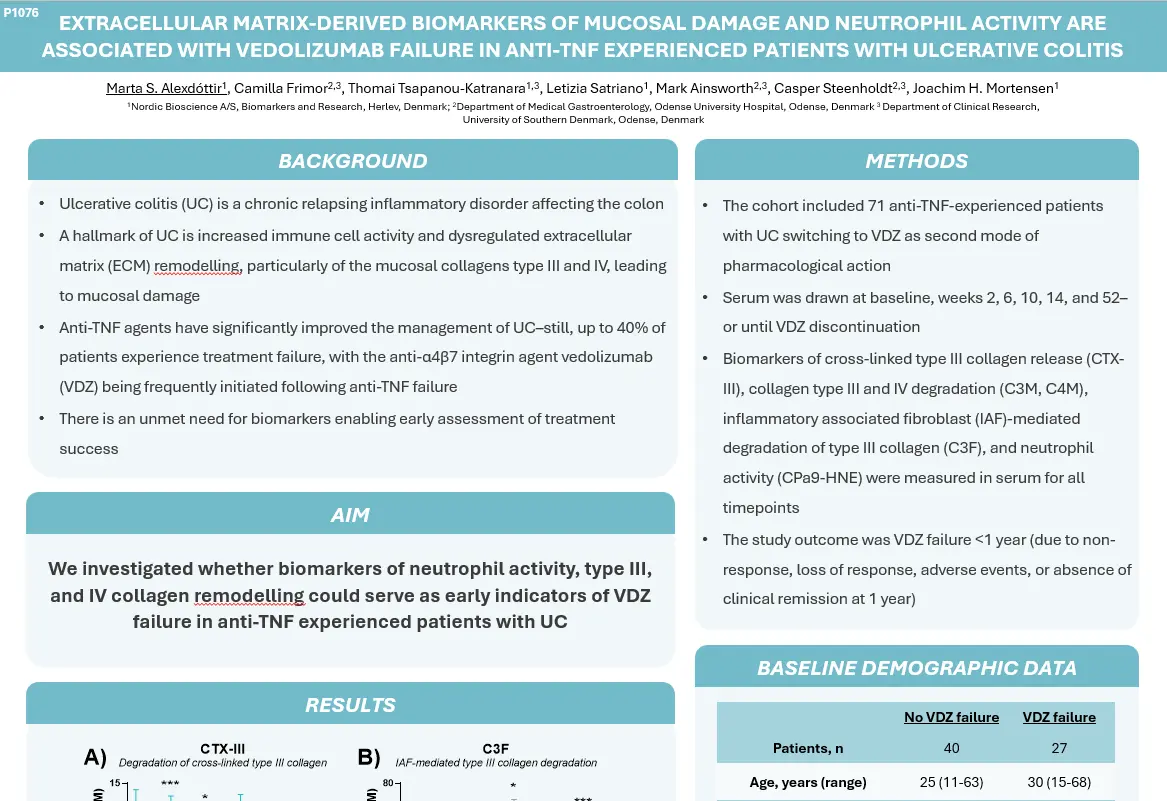
ECM-derived biomarkers of mucosal damage and neutrophil activity are associated with the failure of VZD
Introduction
Ulcerative colitis (UC) is a chronic relapsing inflammatory disorder affecting the colon. A hallmark of UC is increased immune cell activity and dysregulated extracellular matrix remodeling, particularly of the mucosal collagens type III and IV, leading to mucosal damage. Anti-TNF agents have significantly improved the management of UC-still, up to 40% of patients experience treatment failure, with the anti-α4β7 integrin agent vedolizumab (VDZ) being frequently initiated following anti-TNF failure. This presents the unmet need for biomarkers enabling early assessment of treatment success.
This study investigates whether biomarkers of neutrophil activity, type III, and IV collagen remodeling could serve as early indicators of VDZ failure in anti-TNF experienced patients with UC.
The early increase in CTX-III, reflecting fibrosis resolution, was associated with the absence of VDZ failure, whereas increased neutrophil activity (CPa9-HNE), IAF-mediated collagen type III degradation (C3F) and mucosal damage (C3M, C4M) were associated with the failure of VZD. These findings suggest that biomarkers reflecting neutrophil activity and inflammatory events in the mucosa may serve as promising tools for the early and dynamic assessment of later VDZ treatment outcomes in anti-TNF experienced patients with UC.
Get in touch
Are you interested in exploring collaboration possibilities? Enter your information in the form and a representative will contact you shortly.
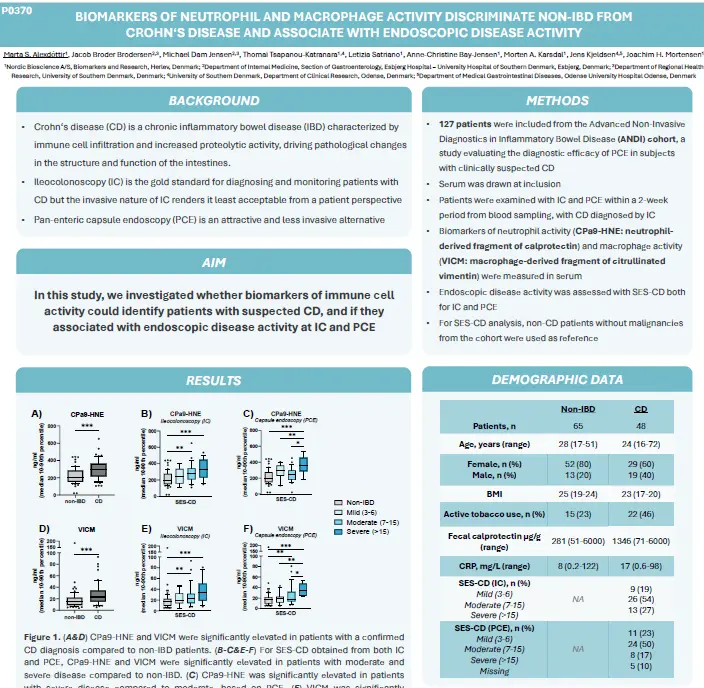
Biomarkers of neutrophil and macrophage activity discriminate non-IBD from CD and associate with endoscopic disease activity
Introduction
Crohn’s disease (CD) is a chronic inflammatory bowel diseases (IBD) characterized by immune cell infiltration and increased proteolytic activity, driving pathological changes in the structure and function of the intestines. Ileocolonoscopy (IC) is the gold standard for diagnosing and monitoring patients with CD but the invasive nature of IC renders it as least acceptable from a patient perspective. Pan-enteric endoscopy (PCE) is an attractive and less invasive method.
This study aimed to investigate whether biomarkers of immune cell activity could identify patients with suspected CD, and if they associated with endoscopic disease activity at IC and PCE.
CPa9-HNE [neutrophil activity] and VICM [macrophage activity] could identify patients with confirmed CD and were associated with endoscopic disease activity. Both biomarkers provided stronger discriminative performance when assessing disease activity by utilizing PCE. Biomarkers of neutrophil and macrophage activity may therefore provide additonal information to endoscopic assessment in the diagnosis and monitoring of CD.
Get in touch
Are you interested in exploring collaboration possibilities? Enter your information in the form and a representative will contact you shortly.