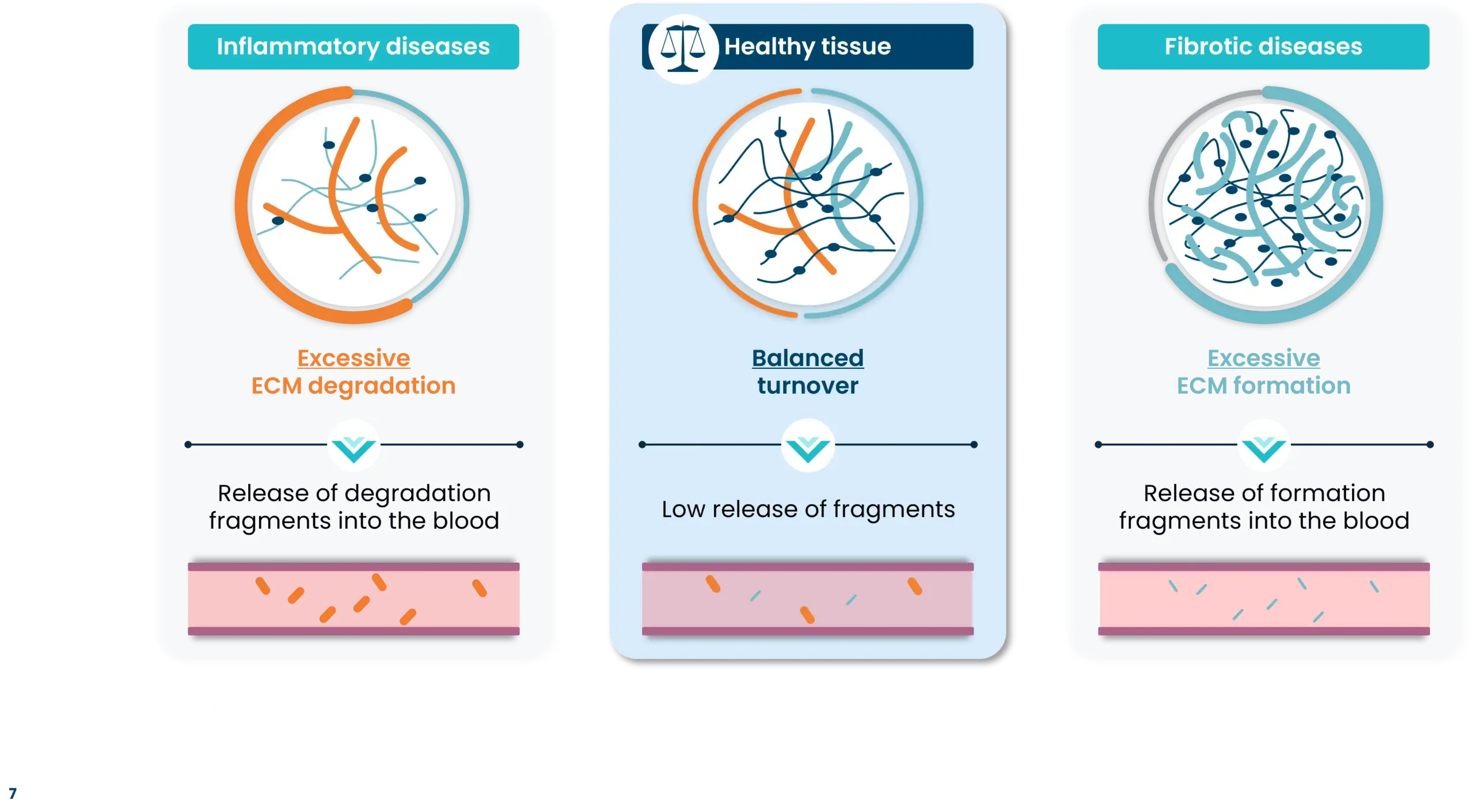
- Does your compound have an anti-fibrotic effect? Anti-inflammatory drugs reduce tissue destruction. Few address fibroblast-driven collagen formation. PRO-C3 and PRO-C6 will reveal whether your compound does both.
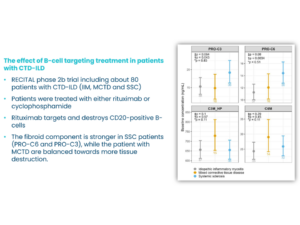
- Our fibrogenesis biomarkers identify patients with high fibroblast activity. Patients with elevated PRO-C3 or PRO-C6 at baseline are the fibroid endotype. They respond differently to standard immunosuppression and may need anti-fibrotic combination therapy.
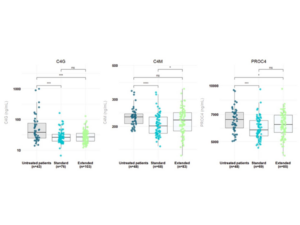
- Across multiple trials and disease areas, a consistent pattern emerges: anti-inflammatory therapies reduce tissue destruction, but leave fibrogenesis biomarkers unchanged, pointing to a subgroup that may require a different type of treatment.
Fibroblast activity predicts response to B-cell depletion. Nordic fibrogenesis markers capture it from a blood draw.
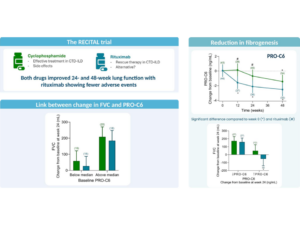
In the RECITAL trial, patients with the largest on-treatment reductions in PRO-C6 showed the greatest FVC improvement after rituximab. Patients with high PRO-C3 were 2.5x less likely to respond to tocilizumab. ECM biomarkers add a tissue-level readout to your B-cell program that immunophenotyping cannot provide.