Fibroblasts and Tissue Destruction in Arthritic Diseases

This webinar focuses on the intricate interplay between fibroblasts and arthritic diseases. Our panel of experts will unravel mechanisms behind tissue damage and repair, discussing fibroblast activation, collagen overproduction, and scar tissue formation.

Discover how blood-based biomarkers of extracellular matrix destruction offer insights into treatment effectiveness and patient well-being. Our speakers will also give insights into PRIME cells’ role in heralding rheumatoid arthritis flare-ups and delve into the molecular underpinnings of symptoms like pain and morning stiffness.

Agenda

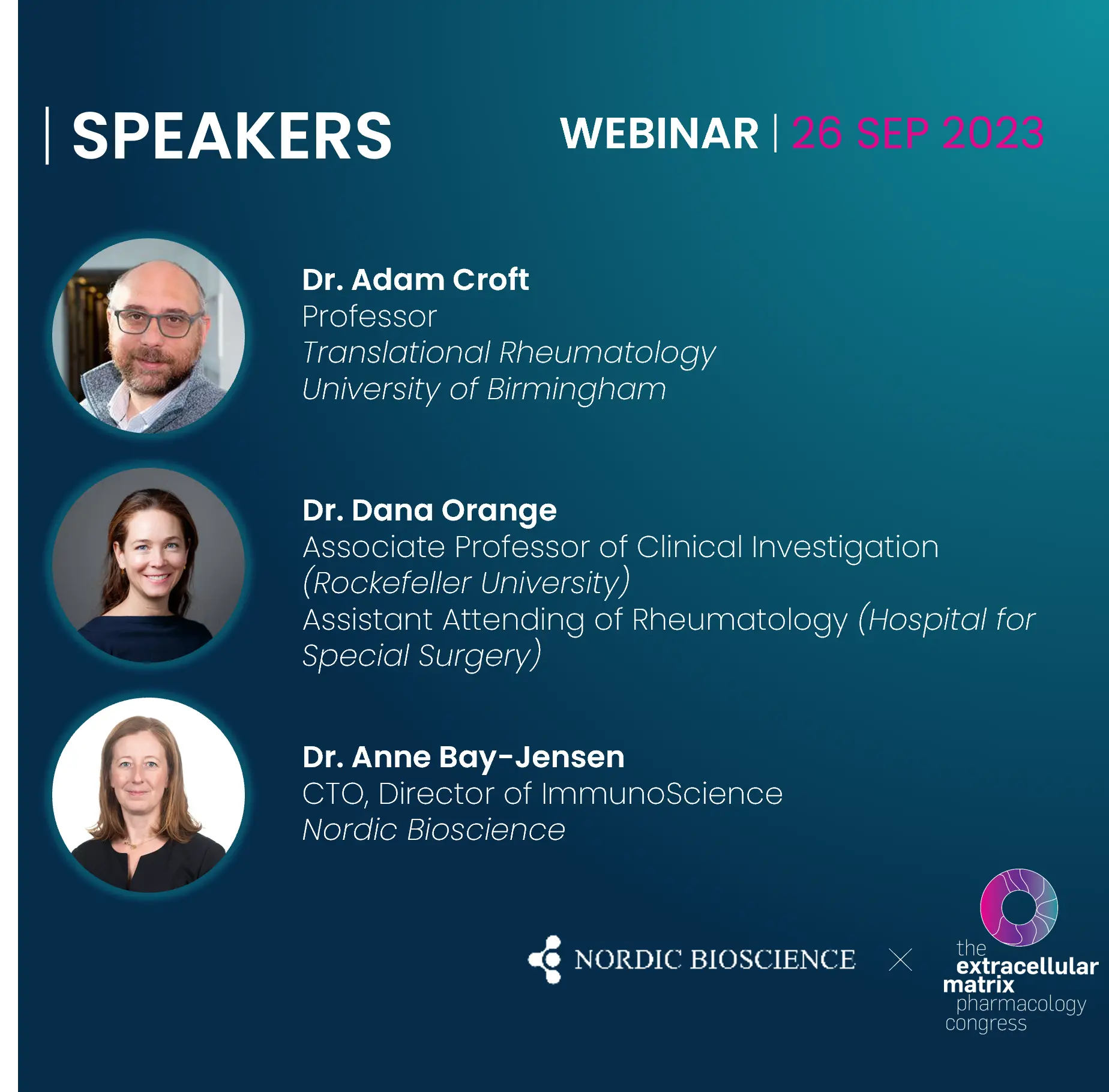
  • Fibroblast Activation in Arthritis – Dr. Adam Croft
  • PRIME cells in Rheumatoid Arthritis Flares – Dr. Dana Orange
  • Identification of Fibrotic and Fibrolytic Endotypes in Rheumatic Disease Cohorts – Dr. Anne Bay-Jensen
  • General discussion and questions

We will explore how measuring tissue damage through blood markers can offer insights into treatment effectiveness and patient experiences. A segment is dedicated to PRIME cells, fibroblast-like entities in blood that signal rheumatoid arthritis flares. We will also delve into the molecular basis of symptoms like pain, morning stiffness, and flares in rheumatoid arthritis.
This webinar spotlights the buzz around developing fresh therapies targeting fibroblasts and fibrosis in arthritic diseases. By sharing the latest research, we aim to shed light on the specific roles and types of fibroblasts driving disease progression and outcomes.

Scientific topics and speakers

In this edition of the ECM Pharmacology Symposium Series, we’re diving into the realm of fibroblasts and their relevance in arthritic diseases. These cells are key players in disease progression, responsible for crafting collagen and extracellular matrix proteins that build the foundation of tissues. In arthritic conditions, activated fibroblasts kick into overdrive, generating excess matrix components, leading to the formation of scar tissue, or fibrosis, with potential impact on joints and tissues.

We will explore how measuring tissue damage through blood markers can offer insights into treatment effectiveness and patient experiences. A segment is dedicated to PRIME cells, fibroblast-like entities in blood that signal rheumatoid arthritis flares. We will also delve into the molecular basis of symptoms like pain, morning stiffness, and flares in rheumatoid arthritis.

This webinar spotlights the buzz around developing fresh therapies targeting fibroblasts and fibrosis in arthritic diseases. By sharing the latest research, we aim to shed light on the specific roles and types of fibroblasts driving disease progression and outcomes.

Dr. Adam Croft

  • Dr. Adam Croft is a Professor of Translational Rheumatology at the University of Birmingham and also serves as a Consultant Rheumatologist at University Hospitals Birmingham.
  • He holds a senior research fellowship from the Kennedy Trust for Rheumatology Research.
  • Dr. Croft’s research program encompasses the entire spectrum of inflammatory arthritis, spanning from children to adults.
  • His goal is to establish connections between synovial tissue pathology and specific disease outcomes and treatment responses.
  • He places a strong emphasis on the discovery of novel and actionable therapeutic targets, leveraging cutting-edge single-cell profiling technologies.
  • Dr. Croft’s research is particularly focused on understanding the role of tissue resident fibroblasts in perpetuating inflammation in immune-mediated inflammatory diseases and finding therapeutic strategies to target these cells effectively.

Dr. Dana Orange

  • Dr. Dana Orange, MD, MSc, holds the position of Associate Professor of Clinical Investigation at Rockefeller University and serves as an Assistant Attending of Rheumatology at the Hospital for Special Surgery.
  • She earned her medical degree from Weill Cornell Medical College, Cornell University, and obtained her MSc from Rockefeller University.
  • Dr. Orange completed her Internal Medicine Residency at New York Presbyterian Hospital and her Rheumatology Fellowship at the Hospital for Special Surgery.
  • Her research is dedicated to unraveling the molecular mechanisms behind symptoms associated with rheumatoid arthritis, including pain, morning stiffness, and flares.

Dr. Anne Bay-Jensen

  • Dr. Anna Bay-Jensen serves as the Chief Technology Officer (CTO) and Director of ImmunoScience at Nordic Bioscience, where she has been part of the team since 2008, starting as a post-doc and advancing to leadership roles.
  • She is recognized for her hard work, innovative thinking, and leadership in the development of novel biomarkers that support precision medicine, an ongoing journey.
  • Dr. Bay-Jensen’s research primarily focuses on biomarkers related to rheumatic diseases, with a particular emphasis on joints and rheumatoid arthritis, a field she has dedicated two decades to.
  • She has an impressive academic record with 10,459 citations, an h-index of 60, and an i10-index of 191, reflecting her significant contributions to the field.
  • Her research has highlighted the importance of extracellular matrix remodeling as a common denominator in connective tissue diseases and the development of novel combinations of post-translational modification (PTM) neo-epitopes as tissue-specific biochemical markers.
 

Get in touch

Are you interested in exploring collaboration possibilities?
Enter your information in the form and a representative will contact you shortly.

    Serum Calprotectin and Mucosal Damage in IBD

    This webinar focuses on the intriguing interplay between inflammatory bowel diseases (IBD) and neutrophil activity, with a special emphasis on the insights provided by the unique CPa9-HNE serum calprotectin.

    Our experts will unravel the biological processes of mucosal damage and healing in inflammatory bowel disease (IBD), and how it relates to neutrophil activity and the extracellular matrix (ECM). Specifically, we will delve into the role of mucosal damage, intestinal fibrosis, and fibro-inflammation, and how they impact ECM remodeling and integrity.

    Agenda

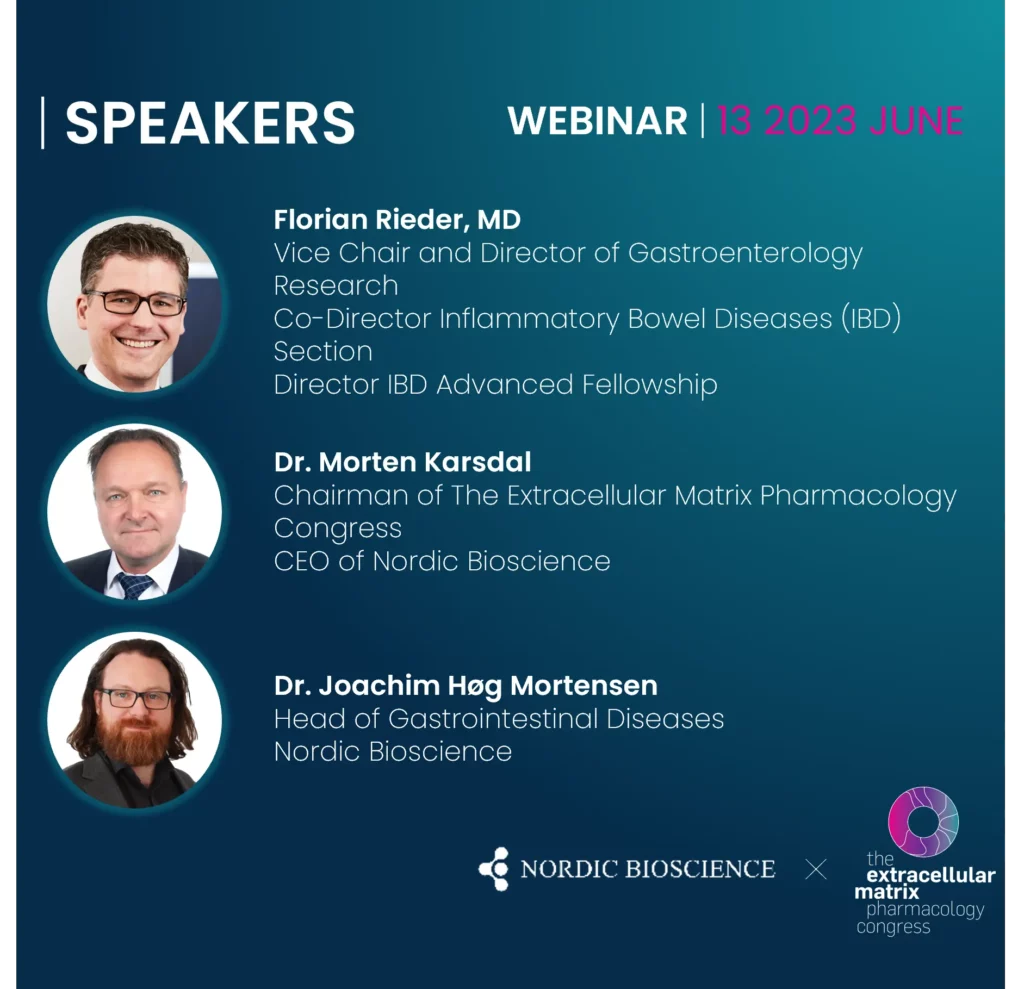
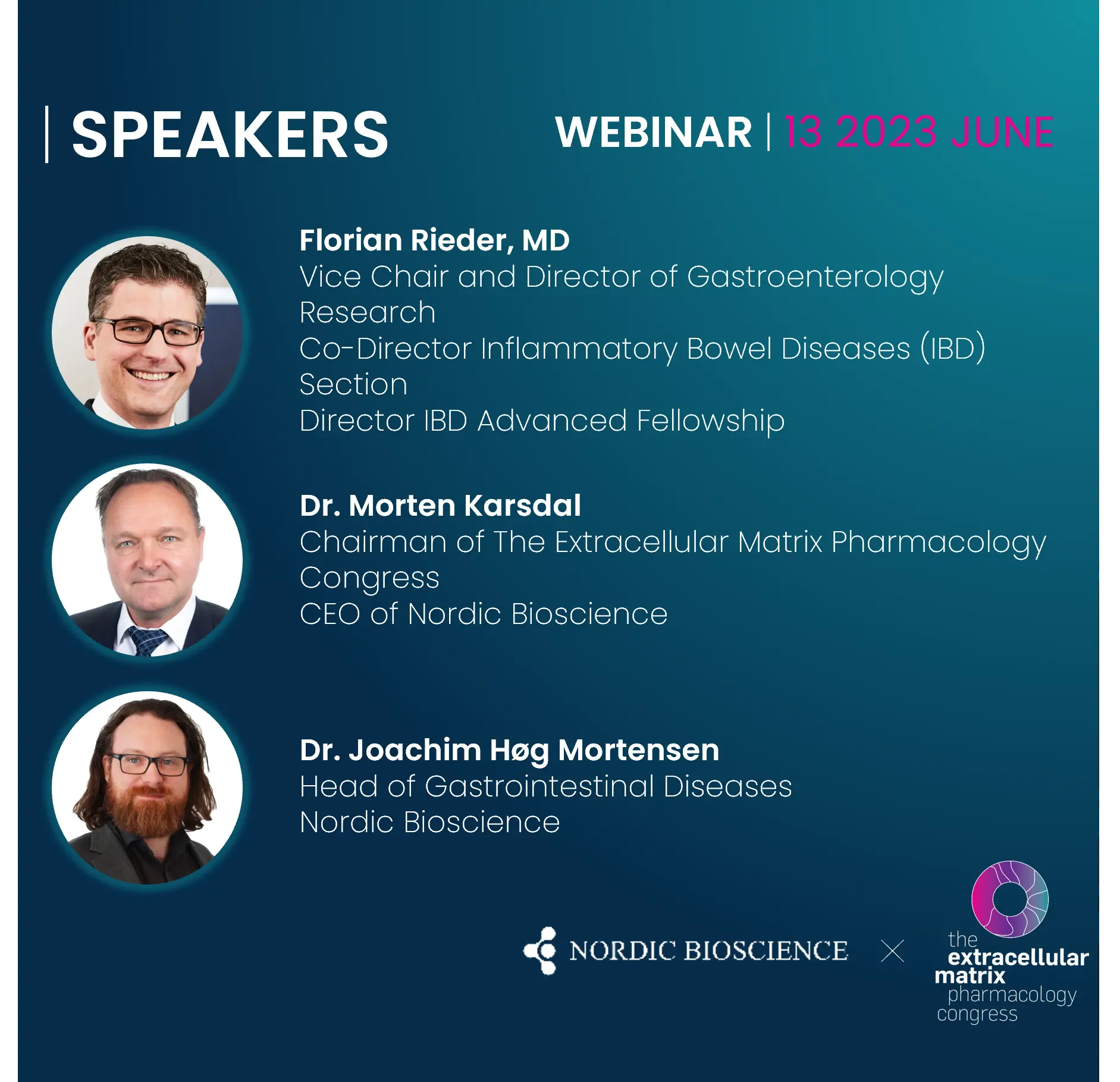
    • The role of neutrophil activity in tissue destruction – Dr. Morten A. Karsdal
    • Mucosal damage and intestinal fibrosis in IBD – Dr. Florian Rieder
    • Fibro-inflammation in IBD a new frontier and how to quantify it – Dr. Joachim Høg Mortensen
    • Questions from the chat

    Scientific topics and speakers

    In this edition of the ECM Pharmacology Symposium Series, we will address the mechanisms of neutrophil activity in chronic diseases, in particular on fibro-inflammation in inflammatory bowel diseases, focusing in particular on fibro-inflammation and mucosal damage.

    We will also present the latest methods for quantifying fibro-inflammation in IBD, such as the novel serum calprotectin biomarker CPa9-HNE, and discuss the implications of these findings for patients. In addition, we will look at current and future treatment options for IBD and the potential impact of these advances on patient outcomes.

    This webinar is an excellent opportunity for researchers, clinicians, and healthcare professionals to gain valuable insight into the latest developments in IBD research and treatment, and to gain a deeper understanding of the intricate interplay of neutrophil activity, mucosal damage and fibro-inflammation in IBD.

    Florian Rieder, MD

    • Dr. Rieder’s clinical focus is patients with IBD with a special emphasis on the field of pathogenesis, prediction, and therapy of intestinal fibrosis.
    • Dr. Rieder has published over 150 articles (h-index 52) and book chapters and he has been awarded the Sherman Emerging Leaders award.
    • He is the lead author of the ECCO guidelines on Ulcerative colitis and the first ECCO clinical consensus on ‘Diagnosis and Management of Intestinal Fibrosis’. He is a past associate editor of Clinical and Translational Gastroenterology.
    • Dr. Rieder serves as an abstract reviewer for all major GI conferences and on several editorial boards of medical journals.
    • Dr. Rieder has significant ties to the ECCO, having served as the chair of Y-ECCO, a member of the ECCO operational board, a prior Y-ECCO committee member, and a member of the scientific committee.
    • He was the past chair of REACH-IBD and is currently the Co-Chair of the Professional Education Committee of the Crohn’s and Colitis Foundation.
    • Dr. Rieder is the leading Principal Investigator (PI) of the international Stenosis Therapy and Research (STAR) Consortium, which aims to test anti-fibrotic medications in stricturing Crohn’s disease.

    Dr. Joachim Høg Mortensen

    • Dr. Mortensen joined Nordic Bioscience in 2013 and currently serves as Head of Department of Gastrointestinal Diseases.
    • The group’s research activities span from biomarker discovery to preclinical and clinical trial exploration focusing on the development and validation of blood-based biomarkers to quantify fibro-inflammation which covers neutrophil activity, mucosal damage and intestinal fibrosis in serum of patients with gastrointestinal diseases e.g. inflammatory bowel disease.
    • The group’s primary focus is to evaluate pharmacodynamics changes, efficacy and monitoring of response to various treatments using biomarkers reflecting fibro-inflammation.
    • Biomarkers are developed to support and understand fibro-inflammation-associated IBD disease progression and response to treatment, where the biomarkers are applied from target selection to clinical trial monitoring.

    Dr. Morten A. Karsdal

    • Dr. Karsdal chairs the Extracellular Matrix Pharmacology Congress, an influential forum dedicated to advancing drug development by identifying changes in the ECM as common denominators in chronic diseases.
    • Dr. Morten Karsdal joined Nordic Bioscience in 2001 and has been serving as CEO since June 2010.
    • He is a prolific author, with more than 650 peer-reviewed articles to his name, accumulating over 34,000 citations and an h-index of 95.
    • He is renowned for his expertise and commitment to biomarker development, extracellular matrix biology, and disease research, particularly in fibrosis, rheumatology, and diabetes. He possesses extensive experience in clinical trial design and the clinical application of biochemical markers, consulting for major pharmaceutical companies.
    • As an honorary professor of inflammation research at the University of Southern Denmark, Dr. Karsdal supervises PhD students and contributes to advancing scientific knowledge in the field.
    • In 2016, he authored the first edition of “Biochemistry of Collagens, Laminins and Elastin,” published by Elsevier Science, which is now in its 3rd edition, providing a comprehensive overview of structural proteins and their relevance in chronic diseases.
    • Dr. Karsdal’s leadership and contributions to the Nordic Life Science community were recognized with the Arthur D. Little Nordic Life Science Award in 2023, highlighting his outstanding management and leadership achievements.

    Get in touch

    Are you interested in exploring collaboration possibilities?
Enter your information in the form and a representative will contact you shortly.

      Tumor Fibrosis in Cancer: Fibroblast Activities and New Biomarkers

      Watch this insightful webinar on tumor fibrosis, where we will explore the latest advancements in cancer research with leading experts in the field.

      This webinar will provide a unique opportunity to hear from experts in the field and gain valuable insights into the latest advancements in tumor fibrosis research. Join us to learn about cutting-edge approaches to developing new therapeutic targets, and the use of biomarkers for patient stratification and evaluating treatment efficacy.

      Agenda

      Opening of the session – Dr. Morten A. Karsdal

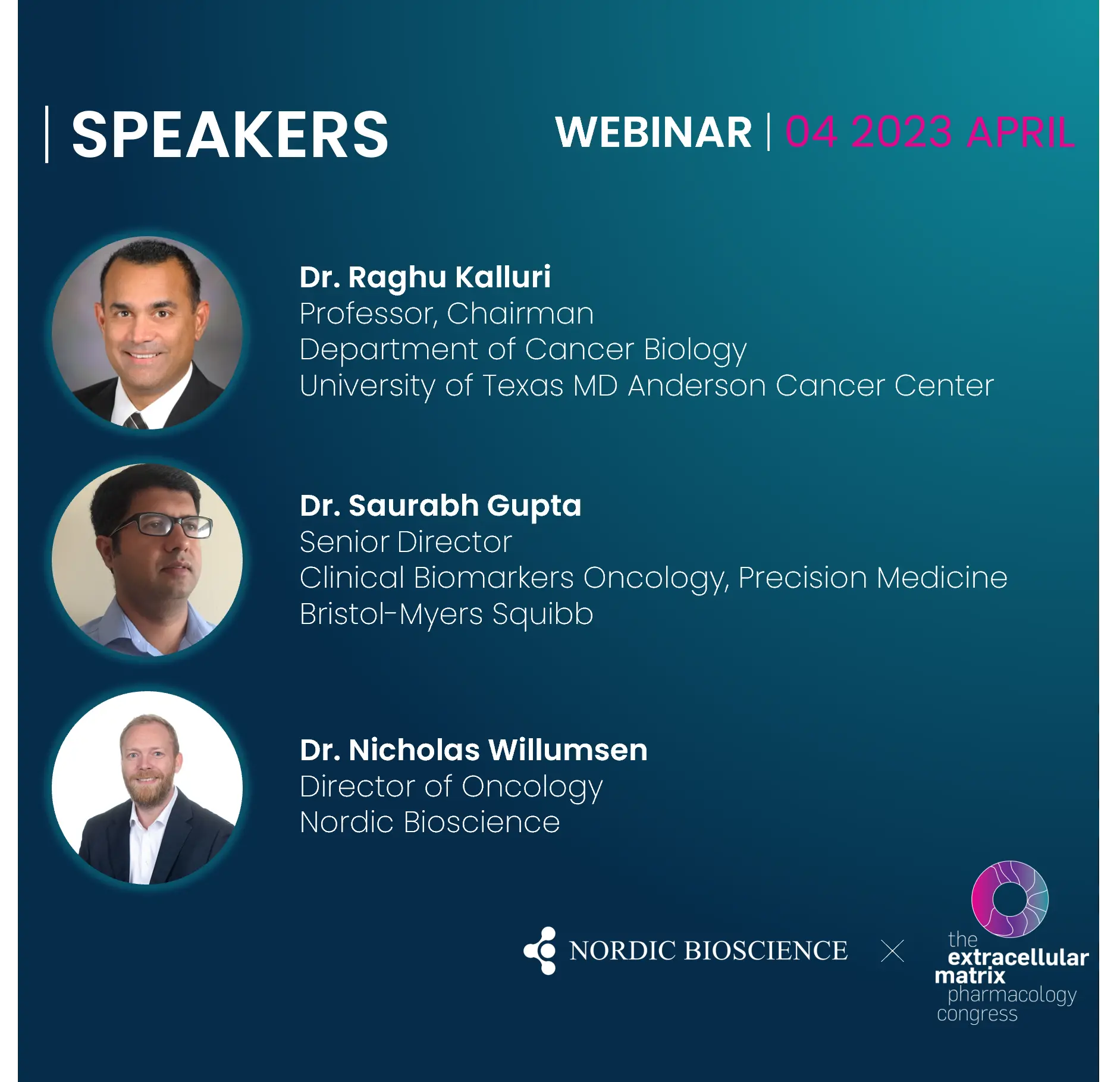
      Tumor Fibrosis and Clinical Outcomes: Underlying Mechanisms – Dr. Saurabh Gupta

      The Collagen Landscape in Cancer: Fibroblast Activities and New Biomarkers – Dr. Nicholas Willumsen 

      Unique and unexpected role of collagens in cancer – Dr. Raghu Kalluri 

      Question from the chat

      Expert line-up

      Dr. Raghu Kalluri (Professor and Chairman, Department of Cancer Biology, University of Texas MD Anderson Cancer Center), is an expert in the cellular microenvironment and will discuss, among others, the unique and unexpected role of collagens in cancer.

      Dr. Saurabh Gupta (Senior Director, Clinical Biomarkers Oncology, Precision Medicine), Bristol-Myers Squibb, is a clinical drug development and biomarker research expert and will provide valuable insights into the underlying mechanisms of tumor fibrosis and the association with clinical outcomes.

      Dr. Nicholas Willumsen (Director, Oncology, Nordic Bioscience), will focus on the development and validation of blood-based biomarkers to quantify tumor fibrosis in serum from cancer patients and discuss how this may inform on cancer-associated fibroblast (CAF) activity and subtyping.

      Get in touch

      Are you interested in exploring collaboration possibilities?
Enter your information in the form and a representative will contact you shortly.

        HFpEF and Extracellular Matrix Dysregulation: Novel Treatment Strategies

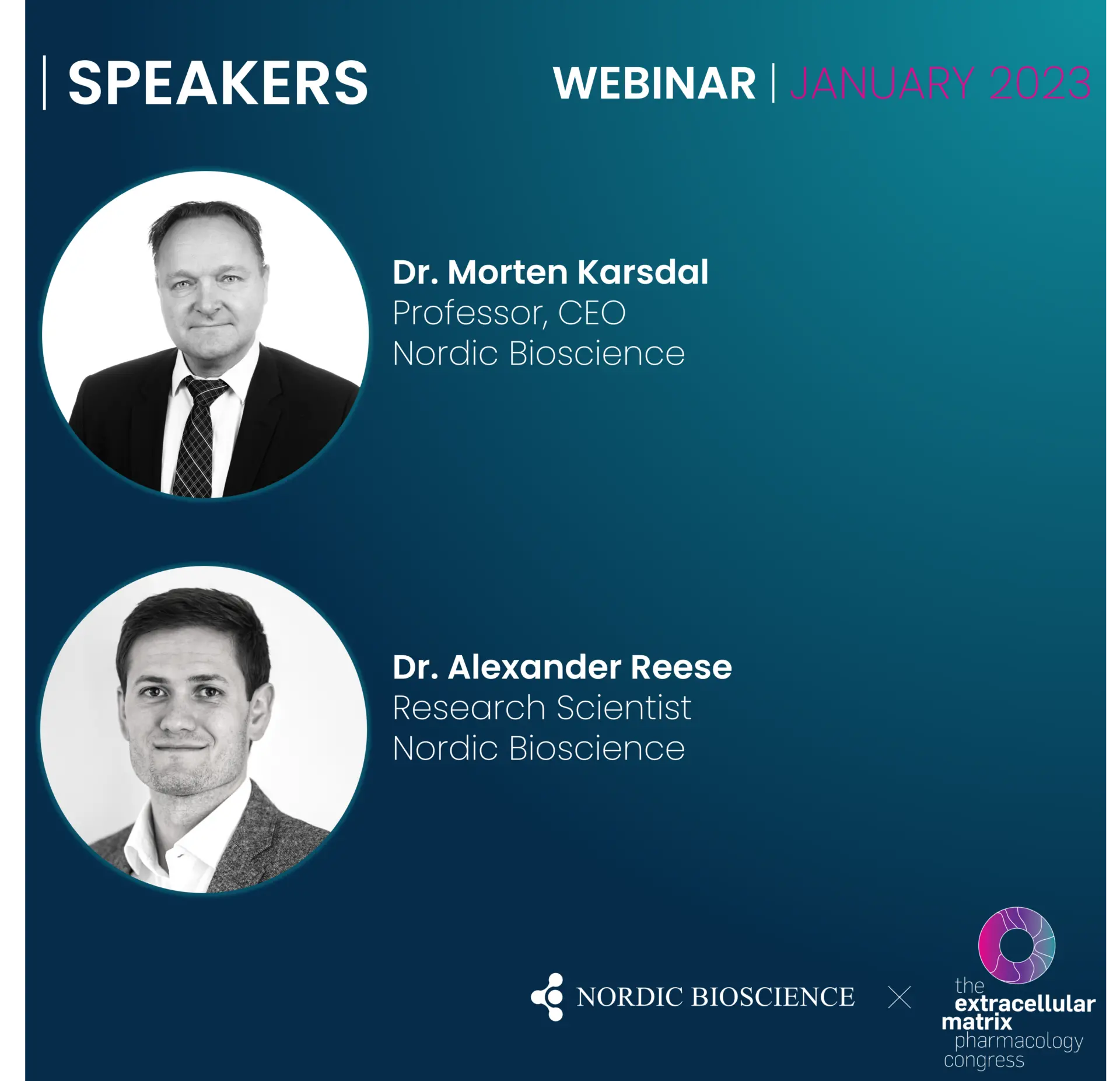
        The session will include a stimulating talk by Dr. Morten Karsdal on understanding the mysteries of the different types of collagens. Dr. Alexander Lynge Reese-Petersen will then spotlight collagen type VI and its relationship to various pathologies, as well as the pharmacological and biological properties of the dangerous hormone Endotrophin.

        Scientific topics

        Extracellular matrix (ECM) dysregulation is the founding cause of tissue fibrosis, a process driving more than 50 pathologies and most chronic diseases. Fibrosis may develop both consequent to either an increase in tissue formation or a decrease in tissue degradation.

        ​​​​​​​Understanding the ECM and the central components of the basement membrane and interstitial ECM will lead to a better understanding of disease mechanisms and to novel treatment strategies. This may be a central part in precision medicine strategies to target the right patients.

        Dr. Morten Karsdal will talk about:

        • ECM remodeling is the common denominator of all fibro-inflammatory disorders
        • Collagens have signaling molecules that we need to understand to understand how the ECM affects cells in fibrosis and tissue turnover
        • Endotrophin and other collagen fragments (Vastatin, Tumstatin and Endostatin) are potential signaling molecules derived from the processing of the collagens in the ECM
        • Understanding ECM turnover may lead to better insight into disease mechanisms and better biological understanding of individual patients

        Dr. Alexander Reese’s presentation will cover:

        • ECM biomarkers are elevated in chronic pathologies and have prognostic significance for outcome. How can we best use this to guide drug development?
        • Endotrophin, a collagen hormone in multi-organ diseases
        • Endotrophin in HFpEF, a potentially treatable high-risk endotype
        • Use of the tissue turnover profile for patient selection

        Get in touch

        Are you interested in exploring collaboration possibilities?
Enter your information in the form and a representative will contact you shortly.