In hidradenitis suppurativa, there are unmet needs where precision medicine could make a meaningful difference. These include improved patient stratification, the ability to predict treatment response, more accurate monitoring of disease activity and a deeper understanding of systemic involvement.
Our dermatology biomarkers support precision medicine by providing information about ongoing pathological processes, such as damage and repair, within the ECM. This enables clinicians and researchers to better understand disease activity and tailor treatments accordingly, ultimately improving patient outcomes. Supported by our long history of experience and expertise, our biomarkers also help streamline drug development by specifically identifying target populations and reducing costs, leading to more efficient studies and lower development costs. Importantly, our dermatological biomarkers do more than detect the presence of disease—they can also reflect localized manifestations of underlying systemic conditions.
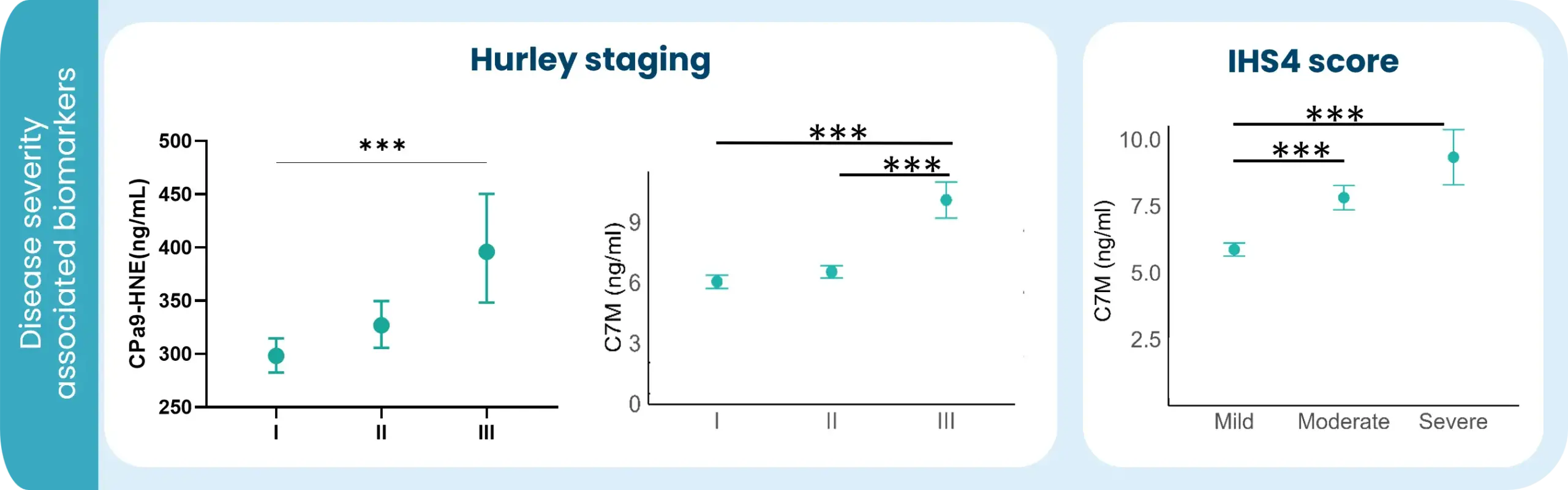 Figure 1. The C7M and CPa9-HNE (nordicCPa9™) biomarkers are associated with disease severity and measured by the Hurley stage and the IHS4 score.