Translational Models in Dermatology

Strategic drug development in dermatology

A drug development route for success is key but often challenging and full of uncertainties. Strategies that can increase the likelihood of success are vital. The FDA and EMA recognize that biomarker-based drug development strategies could be the solution in combination with translation research. This approach offers a biology-focused pathway that reduces time and cost and enhances the overall likelihood of success.

Nordic Bioscience combines innovative translational models with the Nordic ProteinFingerPrint Technology™ to translate findings effectively. This is facilitated by utilizing the same biomarkers across different clinical stages of development creating a link between the preclinical model and the clinic. This strategically selected development route greatly enhances the efficiency of drug development pipelines.

In essence, the integration of biomarker-based drug development strategies in translational research not only accelerates the progression of therapeutics but also increases the likelihood of success. Through advanced translational models in combination with the ProteinFingerPrint™ biomarkers, Nordic Bioscience contributes significantly to the optimization of decision-making processes in clinical development, ultimately ensuring better treatments for the patients.

Bridging preclinical models and patients in dermatologic disease

Our major cornerstone is combining translational models with clinically validated biomarkers to enhance drug development. For this purpose, we have assessed the ability of our biomarkers to bridge the gap between patients with dermatologic diseases and our various model systems.

Our investigations have shown that ProteinFingerPrint™ biomarkers, such as PRO-C3 (nordicPRO-C3™) and C3M (nordicC3M™), which reflect tissue formation and destruction, can assess fibroblast activity and tissue turnover.

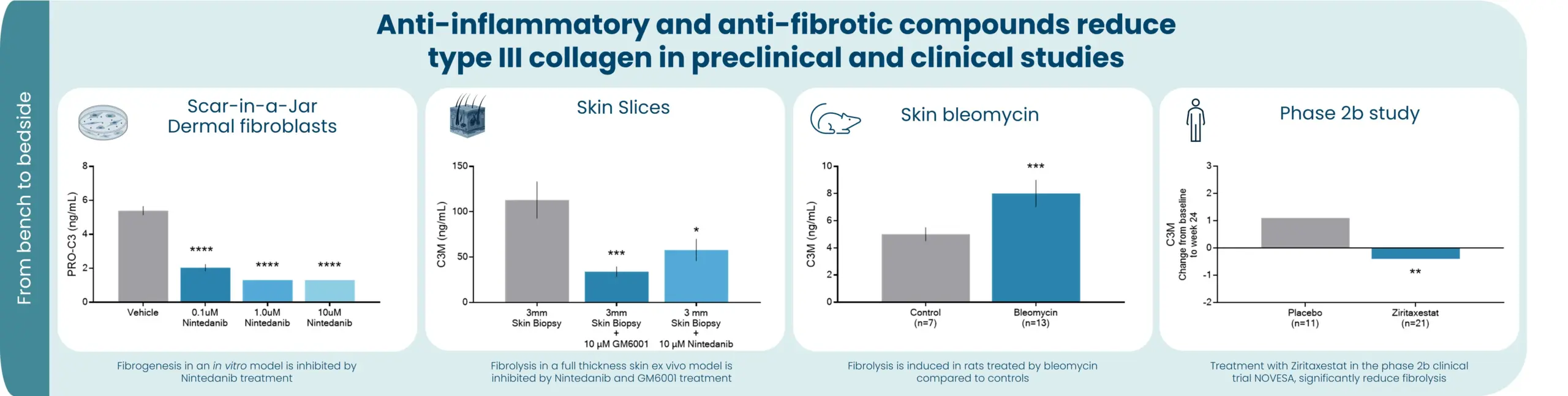
We have evaluated these biomarkers in supernatants from our in vitro models, blood from in vivo models, and blood (serum/plasma) from patients with different pathologies (Figure 1). These findings underline the translational and pharmacodynamic utility of the Nordic ProteinFingerPrint Technology™.


In vitro models: Scar-in-a-Jar


The prolonged Scar-in-a-Jar model uses macromolecular crowding to promote extracellular matrix formation, maturation, and deposition in vitro. The extracellular matrix plays a key role in providing structural support and regulating tissue repair and regeneration by acting as a reservoir for growth factors and cytokines.

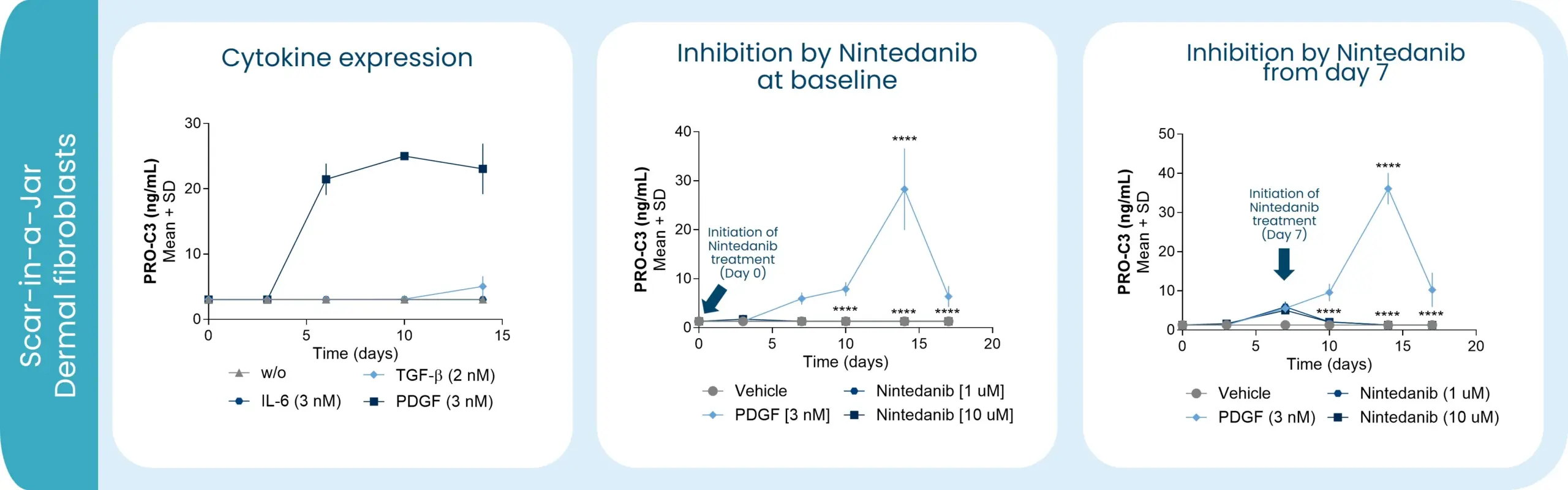
By stimulating patient-derived dermal fibroblasts with pro-fibrogenic and pro-inflammatory cytokines, we model dermal fibrosis in vitro and evaluate anti-fibrotic treatment effects using Nordic ProteinFingerPrint™ biomarkers. This enables quantification of collagen formation in supernatants, supporting direct translational relevance to clinical settings.

As an example, the anti-fibrotic effects of nintedanib were assessed in the model, where the biomarker PRO-C3 was suppressed upon treatment, demonstrating the utility of these biomarkers as pharmacodynamic readouts in an in vitro setting (Figure 2). Similar experiments have been performed with several other compounds, such as IL-4/IL-13, IL-6, and JAK inhibitors.

Ex vivo models: skin slices

The human ex vivo skin slice model uses 3 mm punch biopsies from healthy or diseased skin and allows evaluation of novel compounds in a full-thickness tissue context. This preserves native skin architecture, including epidermal and dermal compartments, enabling more physiologically relevant assessment of tissue remodeling and fibrosis.

The explants can be stimulated with pro-fibrotic and pro-inflammatory cytokines, such as TGF-β and TNF-α, and treated with compounds including nintedanib and matrix metalloproteinase (MMP) inhibitors.

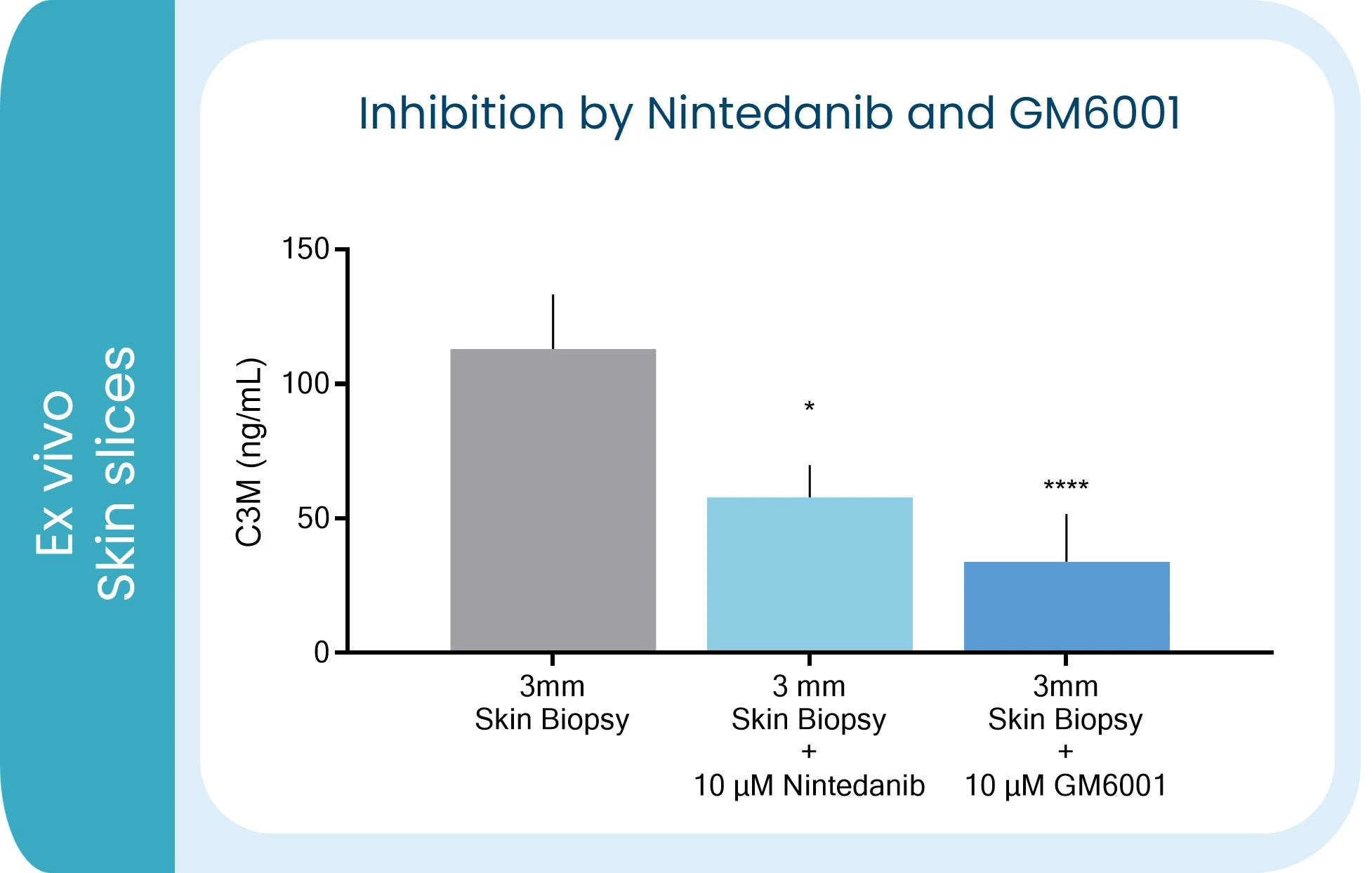
In this model, C3M levels in conditioned media were reduced following treatment with the MMP inhibitor GM6001 and nintedanib, demonstrating inhibition of extracellular matrix degradation and supporting the translational utility of Nordic ProteinFingerPrint™ biomarkers in ex vivo human tissue (Figure 3).

In vivo models: skin bleomycin

Various in vivo models that mimic dermal pathologies, such as the skin bleomycin model, represent important translational tools for studying dermal inflammation and fibrosis.

By collecting blood from these animals, dermal tissue remodeling can be evaluated using Nordic ProteinFingerPrint™ biomarkers, enabling assessment of drug efficacy and pharmacodynamic effects in preparation for clinical trials.

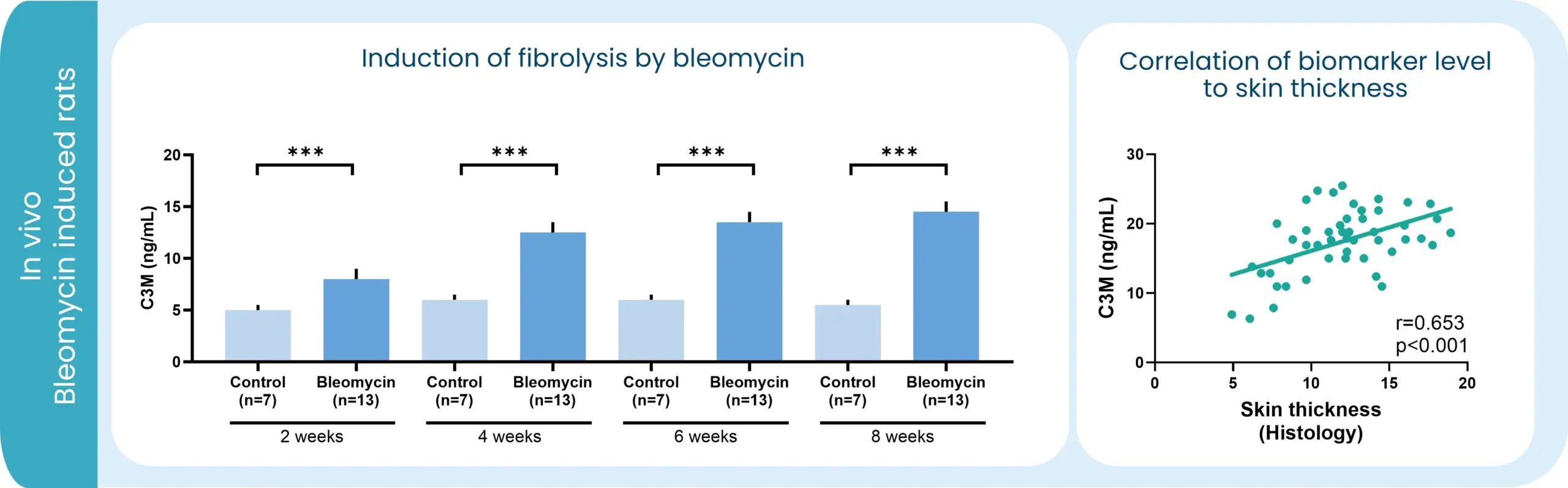
In a study using the skin bleomycin model to induce skin fibrosis, the biomarker C3M was upregulated in bleomycin-treated rats compared with control (saline-treated) rats and was correlated with skin thickness (Figure 4).

Get in touch

Are you interested in exploring collaboration possibilities?
Enter your information in the form and a representative will contact you shortly.

    Nordic Bioscience’s assays and services are research use only products and services and do not qualify for medical or diagnostic purposes.